Introduction and objectives
The Medical Science Liaison (MSL) role is increasingly recognized as a cornerstone of the pharmaceutical industry, offering professionals a dynamic opportunity to contribute to scientific development while fostering strong collaborations with healthcare practitioners. As the demand for MSLs continues to grow, understanding the pathways that lead to this profession, as well as the skills required, is essential for those seeking to enter the field.
The main objective of this study is to extend the analysis from the first article, “Beyond the Brand: How Marketing Professionals Transition into the MSL Role”, by examining how professionals navigate the transition from a previous role in the Sales department to becoming an MSL. The findings aim to highlight the key factors influencing success in the role and provide insights into effective career development pathways.
Methods
The research methodology for this article was already described in the previous publication “Beyond the Brand: How Marketing Professionals Transition into the MSL Role”. Shortly, the project consisted of reaching out to and interviewing active MSLs who were previously sales representatives, brand or project managers, and some with mixed profiles, who had transitioned through both departments. All participants were asked demographic and general questions, regardless of their professional background in Marketing or Sales departments. For this article, MSLs who were previously sales representatives were interviewed for a more detailed section focused on their change to an MSL position.
Results & Discussion
In the previous article, “Beyond the Brand: How Marketing Professionals Transition into the MSL Role”, eleven MSLs distributed throughout Spain were interviewed. Of the 11 people interviewed, 2 were previously product or brand managers, 6 were previously sales representatives, and 3 had a mixed profile since they had experience in both roles before changing their career path to an MSL position. The mixed profiles were interviewed for both profile-specific blocks of questions within the questionnaire. Therefore, in total, 5 questionnaire answers were collected for the profile “From Marketing to MSL” and 9 for the profile “From Sales Representative to MSL”.
All interviewees had a university degree in Life Sciences, with the majority also holding a master’s degree (MSc) (45%), or a MSc and an MBA (36%). None of the interviewees reported holding a PhD. In terms of professional experience, most participants (45%) had between 5 and 10 years of experience in the pharmaceutical industry, primarily in multinational pharmaceutical companies specializing in prescription medicines. Regarding the median time, the interviewees had spent 6 years in their previous roles before becoming an MSL, while their time as MSLs ranged from 1 to 7 years.
As further detailed in the first article, ” Beyond the Brand: How Marketing Professionals Transition into the MSL Role,” most of the participants indicated that they had always wanted to become MSLs. The main reasons for pursuing the MSL role included a strong scientific calling, an interest in scientific communication, and the desire to make an impact on patient care, as well as opportunities for continuous learning and professional development. Many saw the transition as a chance to face new challenges and stay updated with scientific advancements. Regarding their expectations about the role, some interviewees found that their expectations were exceeded, while others discovered that it was somewhat different from what they had initially envisioned. Many challenges were mentioned, such as project management, in-depth knowledge of medical topics and clinical trials, and territory management. In terms of skills, participants identified the need to further develop key competencies, including planning, active listening, flexibility, and scientific communication. Managing time and balancing professional and personal life were key reasons why planning skills were considered the most crucial for the role.
Sales questions
In this section, nine individuals who are currently MSLs and previously worked as sales representatives were interviewed. They responded to a total of five open-ended questions:
What was your main challenge in transitioning to the MSL role from the sales department?
The transition from a Sales Representative to a Medical Science Liaison involves a significant shift in responsibilities and working methodology. Based on the interviews conducted, several key challenges were identified during this process.
The level of scientific knowledge and expertise required in a product, pathology, or therapeutic area is the most critical factor in this transition. While working as Sales Representatives, they could rely on the MSL or Medical Advisor to clarify doubts. Now, however, they must lead scientific discussions with confidence. This requires more intensive study and continuous updates, particularly in complex and fast-evolving fields such as oncology. Although this factor was identified as a challenge by up to six interviewees (66.7%), several participants stated that they embraced this challenge with enthusiasm.
Another commonly mentioned challenge (33.3% of interviewees) was adapting their interactions with Key Opinion Leaders (KOLs) and the transition to a purely educational approach during medical calls. Interviewees noted that while in sales, interactions with physicians were product-promotion oriented, the focus in medical affairs is different: it requires a deep understanding of the drivers influencing clinical decision-making, the development of educational programs, and raising awareness about the pathology. Scientific communication takes center stage, and demonstrating the ability to convey knowledge accurately becomes a personal challenge for many during this transition, despite being accustomed to speaking in front of large audiences. Additionally, two interviewees faced biases from their colleagues within the medical affairs department, who initially perceived them as having a commercial mindset. Interestingly, this internal validation and empowerment process within their new role proved to be a greater challenge than gaining external acceptance from healthcare professionals.
Furthermore, regarding the previously mentioned aspect of drivers, in a minority (11.1%), it was described the need to become proficient with more detailed analytical tools and software for segmenting healthcare professionals as a technical learning curve, adding an extra layer of complexity.
On the other hand, approximately one-fifth of interviewees (22.2%) identified call planning as an area for improvement, both externally, referring to visits with physicians, and internally, regarding company meetings. Unlike the commercial dynamic, where schedules are more flexible and allow or look for a higher volume of interactions with healthcare professionals, the MSL role generally requires pre-scheduled calls, coordinated based on the availability of KOLs. This difference in time management also extends to territorial scope: while Sales Representatives typically conduct a high number of visits within a broad area, MSLs are often responsible for even larger territories.
What strategies have you been able to apply in your MSL role to strengthen relationships with physicians and other healthcare professionals? What sales-acquired skills do you consider the most valuable in your new role as an MSL?
Despite the challenges previously outlined, the transition from a Sales Representative to an MSL does not involve a complete change in skill sets, but rather the application and refinement of previously acquired skills in a different setting. Based on the interviews conducted, several abilities developed in sales have proven valuable for their role as MSLs.
The most mentioned skill (77.8% of interviewees) was developing and nurturing strong interpersonal relationships with clients. The ability to form solid connections with physicians by understanding their needs and preferences is a key asset that supports the MSL’s work.
Flexibility and the ability to adapt to unforeseen circumstances were mentioned by 66.7% of interviewees. Understanding the dynamics of the hospital environment and the availability of healthcare professionals enables MSLs to interpret the context of each call and handle potentially uncomfortable situations, such as last-minute cancellations, with diplomacy and confidence.
Perseverance and proactivity in interactions with physicians were highlighted by 55.6% of respondents. Sales experience instills the willingness to reach out to new professionals. Learning to persist without being intrusive and knowing how to approach physicians in various settings strengthens relationships and facilitates access to relevant information.
Similarly, 55.6% of interviewees highlighted the importance of call preparation and planning. Sales experience provides the ability to plan meetings strategically, while assertive communication, active listening, and adapting the message based on context have proven to be essential skills for making a positive impact in discussions with physicians.
Finally, although mentioned by a smaller group (11.1%), business acumen, emotional intelligence, and confidence were identified as transferable skills. This perspective allows MSLs to align their scientific work with corporate goals and vice versa, facilitating effective communication with key stakeholders.
How did you perceive the relationship between the sales department and the medical department? Has it changed since becoming an MSL? Have any myths you believed been disproven or confirmed?
Despite the small sample size, understood as the number of interviews conducted, the responses to this question were notably diverse, and in some aspects, polarized.
Some interviewees previously saw the medical department as a separate entity working somewhat independently from the rest of the organization; its inherently cross-functional role became evident, and therefore the myth was disproven. Perceptions varied by company: individuals from collaborative environments maintained their views, whereas those from less integrated settings reported an improved perception of medical affairs in their current roles.
Additionally, a small percentage of interviewees mentioned having worked with colleagues who were unaware of the depth of the MSL role’s responsibilities, meaning they didn’t feel their contribution was adequately valued. This was seen as one of the reasons for difficulties in collaboration.
From the perspective of those with more experience in the industry, they believe that over time, the relationship between MSLs and sales reps has become more integrated into common strategies, and today, both are better aligned while maintaining compliance.
Another aspect mentioned was that the medical department is seen as the key reference for healthcare professionals, with the MSL playing an important role in scientific communication.
Regarding salary perception, the belief that MSLs earn significantly more than sales representatives was disproven. Although an MSL’s base salary is typically higher, when considering other incentives, total compensation can be lower.
Do you believe the MSL is just another salesperson?
One of the most debated topics in the pharmaceutical industry is whether MSL can be considered, to some extent, a seller. Interviewees revealed a clear division of perceptions, with arguments that support both positions and nuances that enrich the discussion.
On the one hand, a small minority mentioned that although the MSL does not aim to sell, the service it provides could be interpreted as an indirect commercial contribution. For example, in therapeutic areas where patient targets are scarce, their interactions can be so critical that they can be perceived as close to a sales role, when, in reality, they serve exclusively medical criteria. Furthermore, it was mentioned that the role of the MSL is particularly crucial in the pre-launch phase, and its efforts can significantly influence the initial adoption of the product.
On the other hand, the majority of those interviewed (67%) vehemently rejected the idea that the MSL is a salesperson, emphasizing that its role focuses on medical education and the dissemination of evidence-based information, that is, objectively (Figure 8). It is mentioned that the MSL always addresses (including off-label) discussions towards scientific rigor without direct commercial interests. In this sense, they advocate that MSL serves as a bridge to close the gap between scientific advances and clinical practice, ensuring that healthcare professionals have access to the latest medical knowledge.
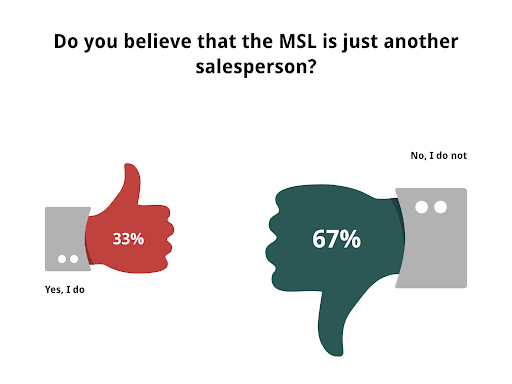
Figure 8. Do you believe that the MSL is just another salesperson? Total n=9.
What advice would you give to someone working in sales who is considering transitioning to the medical affairs department as an MSL?
For those working in sales and considering the transition to the medical department as an MSL, there are several key recommendations outlined by the interviewees to help facilitate this process (Figure 9).
First and foremost, as it has been previously discussed, the role demands significant dedication. The transition requires a high level of medical and scientific knowledge, so continuous study and staying updated on diseases and therapeutic innovations is crucial. Critical reading of scientific articles and developing analytical skills will help demonstrate the ability to absorb and communicate medical information rigorously. Said so, intrinsic motivation is key to success.
Additionally, the interviewees believe that seeking support and guidance within the medical affairs environment is key. Having a mentor, preferably a senior MSL, and spending time with the medical team will provide a clearer understanding of the role and the expectations associated with it. It is also advised to show proactivity and commitment even before obtaining the role. Organizing the logistics of clinical sessions within the assigned territory, staying informed about the territory’s needs in terms of scientific developments, and proposing initiatives aligned with the MSL’s work can help gain visibility and demonstrate readiness for the transition.
It is worth noting that it is also important to manage expectations regarding job compensation. Some interviewees mentioned that, while the base salary of an MSL may be higher, it does not always equate to a higher total compensation. The pursuit of change should not be driven by economic reasons.
Lastly, it is recommended to persevere and not get discouraged if the opportunity doesn’t materialize on the first attempt. Persisting, staying focused on the goal, and consistently demonstrating the necessary skills can make all the difference. Being open to feedback, being honest about the motivation for the change, and communicating it effectively to managers can facilitate the transition.
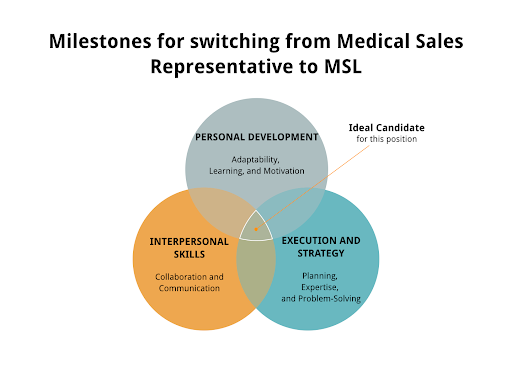
Figure 9. Venn’s diagram with the main milestones mentioned by the interviewees to switch from Sales representative to MSL.
Conclusion
This study underscores that moving into the MSL role is a complex journey, demanding both technical expertise and strategic adjustments. It is recognized that, regarding field positions in the pharmaceutical industry, being an MSL differentiates from the sales representative, with the focus only on medical education and scientific evidence discussions. Therefore, sales representatives who aim for a change must refine their scientific acumen and adjust their communication style to align with medical affairs. However, it is important to acknowledge that a background in sales brings strong interpersonal skills, resilience, and a deep understanding of the commercial landscape, skills that greatly contribute to their development in the new role.
In conclusion, the article emphasizes that moving from a Sales representative to MSL is a possible pathway, as long as scientific curiosity, flexibility, and robust professional networks are cultivated, facilitating the transition. By gaining a clear understanding of the role’s demands and preparing effectively, aspiring MSLs can confidently make this career change and excel in the field of medical affairs.
About the authors:
Héctor Cuerda López, MBA
Héctor Cuerda is a graduate with honors in Veterinary Medicine and has experience in medical environments and basic research, particularly in neurosciences. He has a deep passion for advancing the pharmaceutical and biotechnology industries, leading him to pursue an MBA and equipping him with a unique strategic mindset. Assertive, proactive, diligent, and resilient, he excels in cross-functional roles where collaboration is essential and execution is key. His commitment to continuous learning fuels his dedication to contributing to innovative, health-improving solutions from a ONE HEALTH perspective.
Yasmin Soares de Lima, PhD, MBA
Yasmin Lima is a biologist with a PhD in Translational Medicine from the University of Barcelona and an MBA in Pharmaceutical and Biotechnology industry from ESAME. Driven by a profound passion for science, Yasmin embarked on an academic career for several years. Her desire to bridge the gap between scientific innovation and patient care led her to transition into the pharmaceutical industry. Currently, she serves as a Medical Science Liaison at Eli Lilly and Company, where she keeps improving her ability to exchange cutting-edge scientific knowledge and foster collaborations that drive progress in medicine.
Bet Jené Vinuesa, MBA
Bet Jené is a Biomedicine graduate with a strong passion for science and a deep interest in making a positive impact on people’s lives. Her curiosity and enthusiasm for the pharmaceutical industry led her to pursue an MBA, equipping her with a broader understanding of the business and strategic aspects of the sector. She is a proactive, resilient, and empathetic professional, always eager to learn and take on new challenges. After gaining valuable experience through a one-year internship in hematology marketing, she is now further developing her career in the pharmaceutical field as part of a rotational program at Novartis, where she continues to expand her expertise and contribute to innovative healthcare solutions.

Claudia Conesa, MSL, MBA
Claudia Conesa holds a degree in Pharmacy and a Pharma MBA. She has more than 4 years of experience in the Pharmaceutical Biotech industry in the Medical Affairs and R&D department. She is currently an MSL at Amgen, with responsibility in Bone Metabolism, Neuroscience, Inflammation, and Rare Diseases.

Victor Sastre, MSc, MSL-BC
Victor has more than 20 years of experience in the pharmaceutical biotech industry, Medical Affairs, and R&D. Professor in several master’s and Pharma MBA Coordinator. Passionate and author of various publications related to the MSL position. He is currently a Senior MSL Head at Amgen, with responsibility for Bone Metabolism, Neuroscience, Inflammation, and Rare Diseases. Victor has previous experience at Parke-Davis and Pfizer. In 2018, he received the MSL Award of the Year-Outside USA from the MSL Society. Victor is also a Board-Certified Medical Science Liaison (MSL- BC®).
Have an opinion on this article? Send a message to the editor.