Introduction
The pharmaceutical industry is a dynamic and constantly evolving sector, where science and innovation come together to improve people’s health and quality of life. Different professional profiles work hand in hand, as a perfect gear, to achieve these common goals. In this complex ecosystem, the medical department is a fundamental pillar, providing scientific support at all stages of the drug, and ensuring its safety, efficacy, and proper use. Within the medical department, the role of the Medical Science Liaison (MSL) has recently acquired exceptional relevance.
For those junior profiles, without previous experience within the pharmaceutical industry, accessing a position within this sector can be a great opportunity for personal and professional growth and development. In particular, working in the medical department and the role of MSL can be very attractive for these profiles, as it involves constant learning and challenge in an innovative environment. However, not knowing the sector closely can be an obstacle to applying for these positions as it is difficult to know if your profile is the right one and what you can find as an MSL in your day-to-day work.
In our research project, five students from the MBA Pharma & Biotech at ESAME Madrid, have focused on exploring the role of the junior MSL within/in the pharmaceutical industry, with the aim of providing valuable guidance to those aspiring to enter the sector through the medical department in the role of MSL.
Methods
To carry out this project, we have contacted through the LinkedIn platform with junior MSL professionals from Spain, with 2-3 years of experience in the position, to propose to them as participants in this project. Once we have obtained their consent, we have arranged an appointment to develop the interview through different platforms.
To develop the interview, we have created a questionnaire where we included questions related to the academic background and professional experience of the interviewees and their experience as MSL. The aim of this questionnaire was to identify the key competencies required to work in the medical department and as an MSL, and to obtain practical advice in this regard. Once a total of 12 interviews had been carried out, we collected and worked on the information obtained from them.
Formation required to access to medical affairs
Regarding the formation required to access the medical department in the pharmaceutical industry, the data we have collected from the interviewees have allowed us to reach several conclusions.
Firstly, to become an MSL we found that it is necessary to have previous academic training i.e. university degree, since all interviewees have a bachelor’s in health sciences. Having an academic record in this field is highly recommended, as it allows accrediting the confidence and scientific rigor that an MSL brings when in contact with an HCP.
Notably, among those who want to enter the world of MSL, there is an ongoing dilemma as to whether it is strictly necessary to have a PhD to access this position in Spain. We wanted to ask our interviewees about this field and the data obtained indicate that, although the majority have a PhD in different fields, they only represent 58% (Figure 1). Delving into some of their answers, we can state that of those who have a PhD, the vast majority (71% vs. 29%) consider that it is not essential to have one to be an MSL. However, all the interviewees, both with and without a PhD, agree that having one is very valuable and positive for the position, since it is an experience that helps develop a series of skills that are considered necessary for this position. For example, having a PhD implies knowing how to interpret scientific information, the ability to make oral and writing communications, critical reading, resilience, etc. However, all interviewees indicate that these skills are not necessarily linked to a PhD, but they can be learned and developed with time and experience, even coming from a different department or with other professional experiences.
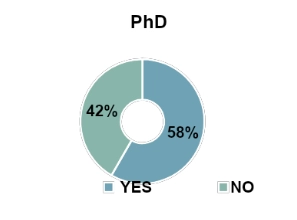
Figure 1. Distribution of interviewees according to whether they hold a PhD (blue) or not (green) in Spain.
Another important point to keep in mind related to the PhD is that it is not yet an indispensable requirement that pharmaceutical companies ask for when looking for an MSL in Spain. However, this is on the rise and is increasingly seen in the job descriptions that priority is given to PhDs or is requested specifically for the position.
The completion of a master’s degree to access the pharmaceutical industry is almost a must nowadays, regardless of the department you want to access. A 100% of our interviewees took a master’s degree to access the industry in different business schools, although 58% of them took a master’s degree specialized in the medical department, the other 42% took an MBA that allow them to have a global vision of all the departments in the pharmaceutical industry and then focused on the medical department as their main interest (Figure 2).

Figure 2. Master’s degree studied by the interviewees. The graph represents the percentage of the interviewees who studied a specialized master in the medical department (blue) and who did not (green).
For all our interviewees the master’s degree was the main bridge to the industry, thanks to the internships they were able to do in different companies within the pharmaceutical sector. As for the department where they did their internship, 75% of them were in the medical department, which allowed them to have that initial experience that catapults them to the subsequent job in this department. Only a 25% of the interviewees came from internships in other departments, mainly marketing or a hybrid between the two of them. This indicates that there is a possibility of pivoting within the pharmaceutical industry to different departments and that it is not strictly exclusive to do an internship in a certain field so that the future employment is simplified only in that area.
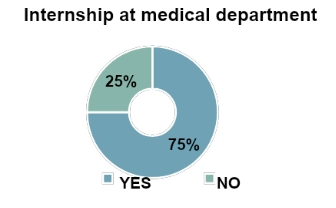
Figure 3. Department in which the interviewees did their internship. This graph represents the percentage of the interviewees that did the internship at the medical department (blue) and the percentage of those who did not (green).
In conclusion, the master’s degree has allowed them to delve deeper into the world of the pharmaceutical industry and learn about the different departments and roles that can be accessed with this accreditation.
Besides academic training, the interviewees mainly recommended courses and complementary training to improve communication and leadership skills as well as notions and in-depth knowledge of compliance. They also include languages as a tremendously important point when being in contact with professionals or other colleagues at an international level.
The MSL Pathway, the expected steps to be followed
Regarding when and how they decided to pursue a career as an MSL, the majority, approximately 90%, indicated that they made the decision to become an MSL before starting their master’s degree, suggesting that the respondents were already focused on this career path. Some participants mentioned that during their professional internships, they had the opportunity to become more familiar with the medical department and the MSL role, which further fueled their initial interest in this area. Others noted that they initially sought entry into the pharmaceutical industry due to their interest in hospital visits, and the opportunity to become an MSL arose during their internship.
Regarding the time elapsed from their first involvement in the pharmaceutical industry until assuming the role of MSL, we observed significant variation. This period ranged from 6 months including the internship period, to 72 months, with a median of 11 months (Figure 4).
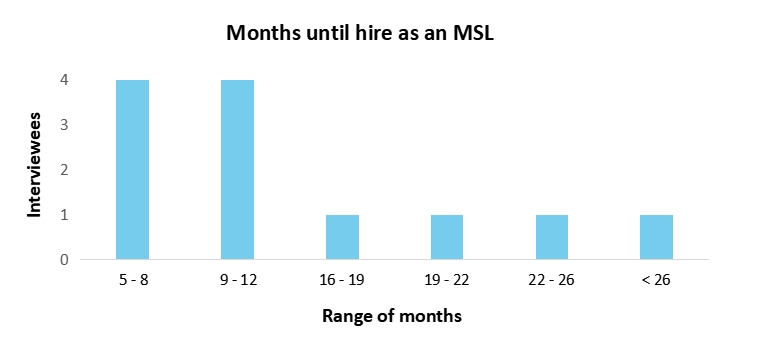
Figure 4. Interval of months in which interviewees were hired for the first time as MSLs. The histogram shows the range of the number of months, including the months of the internships, which took for the interviewees to be hired as an MSL including their internship.
In terms of previous professional experience, approximately two-thirds of the interviewees had prior experience but not in the pharmaceutical industry. This experience primarily stemmed from other fields, all related to science.
Nearly all interviewees indicated that their current position as an MSL was their first job in the pharmaceutical industry, suggesting that many individuals entered this position directly from their academic background or previous professional experience in other fields. For those who had previously worked in the pharmaceutical industry, various departments were mentioned, including positions such as Medical Affairs, Clinical Development Physician and experiences in agencies focusing on healthcare.
Finally, regarding the year they became MSLs, the data shows that the majority became MSLs in 2021, 2022, and 2023, indicating that hiring has been active and linear for junior profiles in recent years (Figure 5).
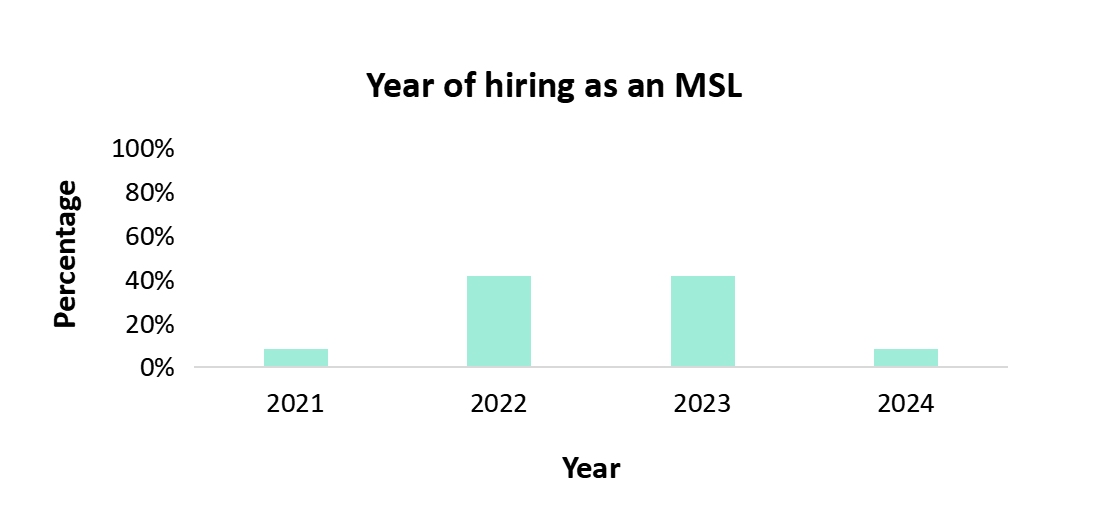
Figure 5. Years in which the interviewees were hired as MSLs. The histogram shows that percentage of interviewees who were hired as MSLs in each year.
Ideal of the MSL Junior profile, what about soft skills?
An MSL occupies a pivotal role, requiring a combination of skills and qualities to effectively bridge scientific knowledge with real-world healthcare applications. Most of the interviewees agree that one of the most important skills required in the MSL role is communication skills. The MSL must not only convey complex information clearly but also have the empathy to understand and connect with healthcare professionals (HCPs) on a human level. This empathetic approach is the basis for building trust and strong relationships, which are vital for the MSL’s success.
Moreover, some of the interviewees highlighted that resilience and adaptability are indispensable traits needed to deal with the challenges inherent in the MSL role. The ability to persevere in the face of setbacks, coupled with a flexible mindset to adapt to different personalities and circumstances, is crucial. Furthermore, MSLs must be scientifically committed, in terms of staying updated of new advancements and translating complex data into accessible information for diverse audiences.
Moreover, the interpersonal skills play a central role, with MSLs expected to be sociable, approachable, and adept at seeking for connections both internally and externally. This needs a commitment to continuous learning and self-improvement, as well as the autonomy to manage responsibilities effectively while remaining flexible. Another important aspect of the MSL profile is authenticity, with natural, personalized interactions allowing to humanize relationships and foster open dialogue. In this regard, having a balance between scientific discussions and personal connections is crucial, since the conversations carried out by MSLs need to combine the scientific expertise and emotional intelligence, adapting the conversation to the individual’s preferences.
In summary, the ideal MSL possesses a multidimensional skill set including effective communication, empathy, resilience, adaptability, and a commitment to continuous growth. By embracing these qualities, MSLs can fulfill their role as trusted liaisons, driving positive outcomes for patients, healthcare providers, and pharmaceutical companies alike.
Tips on how to break into an MSL position in Spain
Participants were asked for advice in terms of breaking into the MSL role for the first time.
Networking was flagged as a crucial component, interviewees recommended to connect on professional platforms such as LinkedIn with master’s degree students, educators, current MSLs, and professionals from other departments within the pharmaceutical industry. In line with this, adopting a proactive approach and striving to go above and beyond expectations were identified as key strategies for success. Additionally, embracing mistakes as learning opportunities and seizing every chance to broaden skills and knowledge were highlighted as valuable advice.
Furthermore, thorough preparation for job interviews was emphasized, including highlighting relevant work experience, and demonstrating enthusiasm for the role, a distinguishing factor for candidates. Moreover, it was advised to upload resumes to multiple job portals and set up alerts for new opportunities. Keeping an open mind about job possibilities and recognizing the value in all roles were deemed essential for growth as a future MSL. Interviewees also stressed the importance of staying focused on the goal of improving patient health and quality of life. Confidence in oneself was considered crucial for pursuing an MSL role.
Following these tips can help individuals navigate the competitive field of pharmaceuticals and achieve success in their MSL career aspirations.
What are the challenges faced by an MSL on a day-to-day basis?
On a day-to-day basis, MSLs face a wide variety of challenges, as it was reported by interviewees. One of the most common challenges include providing value during medical visits to clinicians with extensive scientific knowledge, establishing trust, and tailoring visits to each clinician’s unique profile. An MSL must also meet knowledge challenges, such as the deep understanding of pathologies, staying consistently updated on new developments, and effectively responding to clinicians’ inquiries.
In terms of planning, selecting the appropriate clinicians to attend specific conferences and effectively organizing and overseeing scientific events were highlighted as key areas of focus. Logistical challenges have also been identified, such as the need to undertake trips that sometimes require staying away from home. Some bureaucratic challenges such as the ability to classify clinician’s insights and incorporate them into CRM was also mentioned by participants.
Lastly, working by objectives poses a continuous performance evaluation through metrics. Interviewees reported that having reliable support from their manager and peers helps them handle these challenges daily.
The most amazing things about being an MSL
Participants report that being an MSL involves a deep connection to the field of science, emphasizing the importance of effective communication and social interaction. They also highlight the freedom to organize their schedule and tasks autonomously and the continuous opportunities for personal growth and learning as some of the most amazing things about being an MSL.
In addition, the dedication to ensure the highest quality in medical visits and the close collaboration with different departments of the pharmaceutical industry due to the interdisciplinary nature of the position are positively valued by participants.
What is looked for in a junior profile in Spain?
Proactivity, enthusiasm and, in short, a positive attitude are qualities that interviewees highlighted as essential for a junior MSL, both when it comes to finding a job and in the day-to-day basis of this position.
When it comes to approaching a job interview for a junior profile, the interviewees have highlighted as essential aspects to know how to transmit motivation and desire for the job opportunity. Being in a competitive environment, in which all candidates have a great academic background, the attitude shown in the interview can be a differential aspect. This can be reflected in the knowledge you have about the position, the company, as well as in the preparation of the interview. In this sense, knowing how to transform previous experiences into lessons learned can be crucial for a junior profile with little previous work experience.
On the other hand, having done an internship within the pharmaceutical industry can be a great advantage, as it allows you to understand the inner work of the industry, and to make your own network and make your work within the company known.
As for the day-to-day basis as an MSL, the interviewees reported that, in addition to fulfilling the responsibilities of the position, in a junior profile you are expected to give more than expected. You should be eager to grow, to get involved in all possible projects and to learn. You are advised to be participative despite the risk of making mistakes, since the important thing is to try to contribute innovative ideas. In addition, understanding the less pleasant side of the profession and showing a resolute attitude are also highly valued in these profiles.
Concluding remarks
The role of the junior MSL in the pharmaceutical industry is a multifaceted one, requiring a blend of academic excellence, practical experience, and a diverse skill set. Our research underscores the significance of academic qualifications, with a bachelor’s degree in health sciences being foundational, while a master’s degree offers a deeper understanding of the industry landscape. Although a PhD is not strictly necessary, it’s increasingly valued, particularly for its enhancement of critical skills like scientific interpretation and communication.
Soft skills play a pivotal role, with effective communication, empathy, resilience, and adaptability being paramount. Networking, proactive engagement, and a willingness to embrace challenges are key strategies for aspiring MSLs. Moreover, keeping the focus on improving patient health and quality of life, along with confidence in oneself, are essential for success in this dynamic role.
Despite the rewarding aspects of being an MSL, it comes with its share of challenges, including providing value during medical visits, logistical complexities, and continuous performance evaluation. However, with support from peers and managers, these challenges can be navigated effectively.
Finally, a positive attitude, enthusiasm for learning and growth, and a proactive approach define the ideal profile of a junior MSL. By embodying these qualities and leveraging available resources, individuals can break into the MSL role and thrive in the competitive pharmaceutical industry, contributing to positive outcomes for patients, healthcare providers, and pharmaceutical companies alike.
About the authors:

Sonia Domínguez Zorita, PhD, MBA
Sonia is a biochemist and holds a PhD in Molecular Biosciences focused on the role of Cell Metabolism in Oncology, Immunology, and Rare Diseases. Currently, working in Medical Affairs at Biogen, she is committed to improving the well-being of patients suffering from immune-mediated diseases. Meanwhile, she is pursuing an MBA in Pharma & Biotech in order to gain a 360-degree view of the industry. She is enthusiastic about sharing scientific knowledge and fostering education, and her main goal is to improve patients’ treatments and quality of life through the MSL role. Always looking for new challenges, Sonia is motivated by a keen desire for personal and professional growth within the Pharma industry.
Paula Guerra Chil, MBA
Paula is a pharmacist with experience at community pharmacy. She is currently pursuing an MBA in Pharma & Biotech and is completing her internship at Recordati Rare Diseases in the oncology division. In her hybrid role, she supports both the marketing and medical departments. She is passionate about improving patients’ lives and consistently seeks new challenges that foster personal and professional growth.

Maria Gracia Barranco Garés, MBA
Gracia holds a Bachelor’s degree in Pharmacy and an MBA in Pharma & Biotech. Additionally, she is a double University Expert in Individualized Drug Formulation and has a Master’s degree in Dermocosmetics and Formulation. Her professional experience includes working at the Official College of Pharmacists and in a pharmacy, where she gained a comprehensive understanding of the pharmaceutical profession.
Currently, Gracia works in the Value-based Healthcare Innovation – Market Access & Public Affairs department at Novo Nordisk. Passionate about continuous growth in the pharmaceutical industry, her goal is to contribute to improving patients’ quality of life.

Lucía Dávila García, MBA
Lucía is a nurse by profession, currently pursuing a Bachelor’s degree in law and an MBA in Pharma & Biotech to focus her healthcare experience and her legal background on the pharmaceutical industry. She works as a Market Access, Health Economics Outcomes Research and Real World Evidence consultant at Omakase, a strategic partner that develops generation evidence projects for leading pharmaceutical companies. Passionate, committed to work and disciplined, with a lot of curiosity to progress in her work and open to new international horizons.

Sandra Martínez Canales, PhD, MBA
Sandra is a pharmacist and holds a PhD focused on the study of therapeutic targets in Oncology, above all gynecological cancers. She is currently pursuing an MBA in Pharma and Biotech and is doing her internship in the medical department in immunology at Pfizer. Great proactivity to learn and work every day to improve the health and quality of life of patients.

Claudia Conesa, MSL, MBA
Claudia Conesa holds a degree in Pharmacy and a Pharma MBA. She has more than 5 years of experience in the Pharmaceutical Biotech industry in the Medical Affairs and R&D department. She is currently a MSL in Amgen, with responsibility in Bone Metabolism, Neuroscience and Inflammation.

Víctor Sastre, MSL-BC, MS
Victor has more than 20 years of experience in the pharmaceutical biotech industry, Medical Affairs, and R&D. Professor in several master’s and Pharma MBA Coordinator. Passionate and author of various publications related to the MSL position. He is currently a Senior MSL Head in Amgen, with responsibility for Bone Metabolism, Neuroscience, and Inflammation. Victor has previous experience at Parke-Davis and Pfizer. In 2018, he received the MSL Award of the Year-Outside USA from the MSL Society. Victor is also a Board-Certified Medical Science Liaison (MSL- BC®).
Have an opinion on this article? Send a message to the editor.