Introduction
Medical Science Liaisons typically need to prepare and deliver a presentation on a clinical article as part of the interview process for new roles. When seeking new opportunities, it might be necessary to prepare several such presentations for different companies over a short period during an active job search. Commonly, one may have a week or less to prepare for these presentations amidst other responsibilities. Thus, finding an approach to efficiently grasp new scientific and clinical information and create a slide deck is essential to optimize time and enhance the likelihood of success. In early 2023, while searching for new opportunities, I found using the engineering design process and ChatGPT to prepare for interviews valuable.
What is ChatGPT?
ChatGPT, a product of San Francisco based OpenAI, is an advanced AI language model. It can generate human-like text responses from any given input. This model utilizes machine learning, specifically a model called GPT, to predict and generate text. It was launched at the end of November 2022. ChatGPT can generate text and answer queries based on the information it has been trained on. With AI now playing a significant role in various sectors, including healthcare, tools like ChatGPT can help streamline work processes and enhance efficiency[1-5].
What is the Engineering Design Process?
The engineering design process is a cyclical and iterative series of steps engineers use to guide their problem-solving [6-8]. They repeat these steps as many times as necessary, making improvements along the way. The process starts with defining a problem, followed by conducting background research, specifying requirements, brainstorming solutions, developing a prototype, testing it, and refining it. This method encourages a systematic approach to problem-solving and can be tailored to suit any field. Figure 1 depicts the process. I utilized the engineering design process to prepare for the MSL clinical paper presentation, and ChatGPT was used as the tool to help generate content.
Figure 1 The Engineering Design Process

Engineering design process description:
- Identify the Problem: Clearly define the problem that needs to be solved.
- Research: Conduct research to understand the problem further and identify any constraints or requirements.
- Brainstorm and Analyze Ideas: Generate multiple possible solutions, and then evaluate them based on the constraints and requirements.
- Develop a Prototype: Choose the most promising solution and create a prototype – a preliminary version of the final product.
- Test the Prototype: Test the prototype under different scenarios and gather data to see how well it solves the problem.
- Evaluate and Improve: Analyze the results of the tests to determine if the prototype can be improved. Make necessary modifications.
- Present the Solution: Once the product or process has met the design criteria, it is finalized and presented.
Using The Engineering Design Process and Chat GPT to Prepare the Clinical Presentation
The stages of the Engineering Design Process can be transposed onto the tasks for preparing for the clinical paper presentation. For instance, understanding a clinical paper can be seen as a problem that needs a solution. This begins with defining the goal (understanding the paper), then researching the topic, specifying the key points, developing an understanding, testing this understanding through discussion or presentation, and finally improving upon this understanding through feedback. This process can aid MSL candidates in breaking down complex topics into manageable parts and help them create more effective presentations. This process can be used with ChatGPT as a tool to do background research, understand complex scientific and statistical concepts, summarize an article, create self-study questions, and create a presentation outline. In early 2023, I used this process for job interviews and found that it significantly reduced preparation time and increased efficiency. Beyond the clinical presentation, ChatGPT was useful in preparing for interviews by generating potential questions and conducting mock interviews. ChatGPT can also provide feedback on responses, aid in researching company information, and help develop presentation skills. However, it is essential to remember that ChatGPT supplements personal understanding and preparation, not a substitute; its outputs should be critically reviewed, and there are ethical considerations[3].
Ethical and Responsible Use of ChatGPT for MSL Candidates
Leveraging AI tools like ChatGPT offers MSL candidates’ substantial benefits for interview preparation. However, there are considerations for ethical and responsible use [3]. These include concerns about inaccurate content generation, confidentiality, privacy, data protection, compliance, transparency, and accountability [3, 5]. Careful navigation of these challenges is essential to ensure AI’s effective and ethical application. For example, in a scenario where an MSL candidate utilizes ChatGPT to create content to develop a clinical presentation for a job interview, ethical challenges may arise if the AI produces content referencing outdated or terminated clinical trials or non-existent literature. To navigate this ethically, the MSL candidate must diligently verify and correct all ChatGPT-generated information, be transparent about the use of AI during the interview, take full accountability for the presentation content, provide feedback to the AI developers if possible, and engage in continuous learning about the AI’s capabilities.
Beyond the interview
Furthermore, beyond the interview, ChatGPT has many applications within medical affairs and healthcare [4, 5]. A recent article in the MSL Society Journal highlighted the top three ways ChatGPT is poised to transform medical affairs: by facilitating research and content generation, breaking down data silos, and streamlining workflows [1]. Generative AI is reshaping how medical affairs professionals work, influencing everything from the generation of evidence, clinical trial design, insights synthesis, and enhancing the understanding of patient journeys [9]. Upon affiliation with a company, it is important for MSLs to adhere to specific company policies when using tools like ChatGPT, with paramount importance placed on protecting patient and research data. This involves complying with HIPAA and other regulations, employing secure AI platforms, and anonymizing data to prevent unintended disclosures. Table 1 provides some suggested do’s and don’ts to guide MSLs and MSL candidates.
Conclusion
In conclusion, the Engineering Design Process, combined with the ethically used ChatGPT, offers MSL candidates a powerful duo for preparing for job interviews and crafting clinical paper presentations. The structured approach of the Engineering Design Process enables candidates with an efficient approach. At the same time, ChatGPT, when used responsibly and ethically, complements this by enhancing the candidate’s ability to perform in-depth research, clarify complex scientific principles, and outline engaging presentations. ChatGPT should act as an adjunct to the candidate’s knowledge and preparatory work, bolstering rather than substituting their expertise.
Disclosure: The composition of this article was assisted with the use of ChatGPT
Table 1 Do’s and Don’ts for Ethical Use of ChatGPT
| Category | Do | Don’t |
| General Use | Use ChatGPT to enhance decision-making and educate on its capabilities. | Don’t blindly rely on the tool without critical thinking. |
| Data Protection & Privacy | Use secure methods for sensitive data. | Don’t share credentials or enter confidential info. |
| Regulatory Compliance | Comply with industry regulations (e.g., HIPAA). | Don’t disregard data protection laws and regulations. |
| Transparency | Clearly disclose usage in professional settings. | Don’t trust ChatGPT generated content without verification. |
| Accountability | Take responsibility for errors and correct them. | Don’t overestimate ChatGPT capabilities. |
| Quality Assurance | Review ChatGPT content for compliance and accuracy. | Don’t compromise patient or customer privacy. |
| Education | Take training on data privacy and security. | Don’t share login credentials with unauthorized individuals. |
| Ethical Use | Use ChatGPT to enhance human knowledge and skills. | Don’t use unauthorized AI tools. |
| Bias and Fairness | Be aware of biases in AI training data. | Don’t perpetuate biases or use biased datasets. |
References
- Silverman, G., The top 3 ways ChatGPT will change medical affairs. The MSL Journal 2023 March 2023
- Zielinski, C., et al., Chatbots, generative AI, and scholarly manuscripts: WAME recommendations on chatbots and generative artificial intelligence in relation to scholarly publications. Colomb Med (Cali), 2023. 54(3): p. e1015868.
- Sheth, S., et al., Ethical Considerations of Artificial Intelligence in Health Care: Examining the Role of Generative Pretrained Transformer-4. J Am Acad Orthop Surg, 2024.
- Gutiérrez-Cirlos, C., et al., ChatGPT: opportunities and risks in the fields of medical care, teaching, and research. Gac Med Mex, 2023. 159(5): p. 372-379.
- Alsadhan, A., et al., The opportunities and challenges of adopting ChatGPT in medical research. Front Med (Lausanne), 2023. 10: p. 1259640.
- Pleasants, J. and J.K. Olson, What is engineering? Elaborating the nature of engineering for K-12 education. Science Education, 2019. 103(1): p. 145-166.
- Oguz Unver, A. and H. Okulu, Encouraging Creative Ideas in the Engineering Design Process for Science Classes. International Journal of Research in Education and Science, 2022. 8: p. 486-501.
- Sudrajat, U., D. Ardianto, and I. Permana, Engineering Design Process: A Review and Bibliometric Analysis. International Journal of STEM Education for Sustainability, 2022. 2: p. 180-192.
- Feng, L., The Impact of AI on Medical Affairs. . The MSL Journal, 2023. November 6.
About the authors:
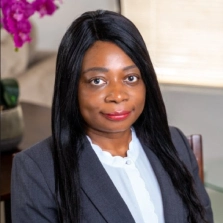
Eyitayo Fakunle, PhD, MPH, MBA, MSL-BC
Tayo Fakunle is an MSL at Syneos Health, a global professional services organization offering integrated commercial and clinical solutions to biopharmaceutical companies. With nearly a decade of experience in Medical Affairs and MSL roles across pharmaceuticals, biotechnology, and medical device companies Tayo’s therapeutic expertise includes Allergy and Immunology, Orthopedics, and Cell and Regenerative Medicine. She is passionate about building and maintaining strong, outcomes-driven relationships with the healthcare community and academic institutions through evidence-based scientific dialogue, research support, and disease-state education.
Her article with Cherie Hyder “How MSL Candidates Can Use the Engineering Design Process and ChatGPT to Prepare for Clinical Paper Presentations,” reflects her passion for exploring innovative approaches to professional development that integrate her educational background, which includes an engineering degree. Tayo aims to empower aspiring MSL candidates with practical strategies for success.

Cherie Hyder, PharmD, MSL-BC
Cherie Hyder is a Syndicated National MSL Director at Syneos Health. In her previous job at Biohaven Pharmaceuticals, she supported a virtual launch of Nurtec ODT for acute migraine. She has been involved in drug development for more than 30 years, working at the FDA in CDER and pharmaceutical companies including Pfizer, Lilly, Novartis, Solvay, and Avanir, among others. At the University of Missouri, she received a Doctor of Pharmacy degree with the intention to devote her career to pharmaceutical research. She has multiple adjunct faculty appointments and enjoys teaching opportunities.
Have an opinion on this article? Send a message to the editor.