The purpose of this paper is to familiarize the readers with Advanced Practice Providers (APPs), specifically Nurse Practitioners and Physician Assistants, and highlight the benefits of Medical Science Liaisons engaging with Advanced Practice Providers as Key Opinion Leaders. By the end of the article, the reader should:
- Understand the educational background, clinical role, and scope of practice of Advanced Practice Providers.
- Understand the benefits of engaging with Advanced Practice Providers
- Be able to effectively identify and engage with Advanced Practice Providers in your territory
Medical Science Liaisons (MSLs) typically form their territory and key opinion leader (KOL) engagement plans at the start of a new position and then update them annually, quarterly, and as needed. This article highlights a group of providers that are often overlooked in KOL engagement planning-the Advanced Practice Provider (APP).
What is an APP?
Advanced Practice Provider is a general title used to describe individuals who have completed the advanced education and training that qualifies them to manage medical problems, prescribe and manage treatments within the scope of their training. The term is used interchangeably for Nurse Practitioners (NPs) and Physician Assistants (PAs), and NPs and PAs are used analogously at most institutions. It is important to note that the AAPA has officially changed the name to Physician Associate, but this term has not been fully adopted yet and it is recommended for PAs to continue to use the term Physician Assistant or PA as the official legal title in the professional capacity for now.
Physician Assistants are licensed clinicians who practice medicine in every specialty and setting. They are trusted, rigorously educated and trained healthcare professionals. The profession started in 1967 and there are approximately 160,000 PAs in the US. PA applicants are required to have a bachelor’s degree prior to PA school. There are 287 PA programs in the US. Most programs are 27-months to 3 years long, with over 2000 clinical rotation hours before culminating with a master’s degree at the end of the education. PAs are required to complete a certification exam after obtaining their degree and recertify every 10 years as well as maintain 100 CME hours/2 years. Additionally, PAs must complete state licensure requirements.
According to the NCCPA statistical profile, the PA profession grew 28.3% between 2018 and 2022, reaching 168,318 PAs at the end of 2022. The estimated number of patients seen each week by all clinically practicing PAs is 10.4 million. 95.7% of clinically practicing PAs prescribe pharmacologic agents for patients. The median number of prescriptions written by Certified PAs per week is 30. PAs have more than 500 million patient interactions per year.
Nurse practitioners are highly trained, licensed clinicians that have been around for more than five decades. The first NP program was developed in 1965 at the University of Colorado. In 1967, Boston College initiated one of the earliest master’s programs for NPs. Similarly to PAs, NPs assess and diagnose patients, order and interpret diagnostic tests, initiate and manage treatment plans and prescribe medications. NPs have more than 6 years of academic and clinical experience. All NPs must complete a master’s or doctoral degree program and have advanced clinical training beyond their initial professional registered nurse (RN) preparation. NPs initially obtain their bachelor’s degree in nursing, then their registered nurse license, then complete their graduate nursing education. Most Master of Science in Nursing (MSN) programs require at least 1,000 hours of supervised clinical experience. Once they obtain their graduate degree, they then can take a national board certification, and obtain their state NP licensure. NPs are licensed in all states and the District of Columbia, practicing under the rules and regulations of the state in which they are licensed.
According to the American Association of Nurse Practitioners (AANP), the number of NPs in the United States has almost doubled since 2013 – growing to more than 385,000 licensed NPs. NP visits total more than 1.06 billion annually. Approximately 88.0% of NPs are certified in an area of primary care, 96.2% of NPs prescribe medications, and those in full-time practice write an average of twenty-one prescriptions per day.
Advanced Practice Provider is a general title used for NPs and PAs. There are differences in education, training, licensure and physician collaboration/oversite. However, both are used interchangeably in clinics, hospitals and institutions as skilled clinicians who manage medical problems, prescribe and manage treatments within the scope of their training. APPs are not the assistants to physicians, nor are they substitutes for physicians, but are extensions of physicians and a valuable member of the medical team
MSLs and Key Opinion Leaders
Medical Science Liaisons help to ensure that products are utilized effectively, serve as scientific peers and resources within the medical community, and are scientific experts. The primary purpose of the MSL role is to establish and maintain peer to peer relationships with leading clinicians, referred to as Key Opinion Leaders (KOLs), at major academic institutions and clinics. MSLs develop KOL engagement plans, collect insights, identify clinical investigators, communicate medical/scientific data, support research activities, and respond to medical information requests. MSLs provide data to ensure patient safety and learn about the patient journey.
Key Opinion Leaders are medical experts, researchers, and thought leaders. Physicians collaborate with their APPs in the care of their patients. APPs at times autonomously and independently prescribe, make treatment changes, and manage adverse effects. APPs serve as sub-investigators alongside Primary Investigators in clinical trials. APPs are often the provider seeing the patients on the trials, triaging adverse events, and sitting in on clinical trial meetings. Additionally, APPs are co-authoring their physician’s publications and may have their own scholarly research projects or papers.
APPs know the treatment landscape, prescribing protocols of the institution, know the patient journey, and can provide real world feedback. The APP’s scope of practice mirrors their Physician. A difference is that APPs are often able to spend more time with the patients, allowing them to provide details from the patient perspective. Furthermore, although APPs also have busy schedules, they may be more accessible to MSLs than the physician.
An APP could be considered a KOL simply because their collaborating physician is a medical expert, researcher or thought leader. An APP could also be considered a KOL because of their individually valued patient care, scholarly work, conference leading, clinical trials involvement or their medical expertise.
Ultimately, if an MSL is not engaging with the physician’s APP, they are overlooking another vital Key Opinion Leader at that institution.
Identifying and Engaging APPs as KOLs
It may take some work to identify key APPs in your territory. Start by directly asking Physicians if they have an APP and to provide their contact information. MSLs can ask the Administrative Assistant or check the hospital/company website to identify APPs. Members of the commercial team should be able to help identify key APPs in the territory. Regional and national APP KOLs can be found by searching professional society websites (like the American Academy of Physician Associates (AAPA) or the Oncology Nursing Society (ONS)), conference faculty lists and APP journals.
Once these expert APPs are identified, they would be the ones that MSLs should engage and consider for advisory boards and speaker bureaus.
The Cheat Code for Ultimate Engagement
Now that the MSL has identified the APP KOLs in their territory, here is the cheat code for ultimate engagement:
- Always Inquire if the physician has an APP.
- Invite the APP to the initial meeting with the physician.
- Confirm the APP’s profession and title.
- Confirm their collaborating physicians and the therapeutic area they practice in.
- If possible, initially meet the APP in a joint meeting with the physician and then alone.
- Engage with the APP similar to how they would engage with the physician.
- Pre-call planning: Determine the goals of engagement. (To learn more about the patient journey, adverse event management, insight gathering, etc.)
- Ask their interests.
- Last, but most importantly, inform the APP that they are considered a KOL, and that their engagement and insight is valued.
Key Take Aways: APPs are extremely valuable clinicians that can provide MSLs with important and impactful insights. The authors task the MSLs to identify the APPs of their top 5 KOLs and develop an engagement plan for them today.
References
National Commission on Certification of Physician Assistants, Inc. (2023, April). 2022 Statistical Profile of Board-Certified PAs, Annual Report, Retrieved Date January 8, 2024, www.nccpa.net/resources/nccpa-research/
All About NPs. (n.d.). American Association of Nurse Practitioners. https://www.aanp.org/about/all-about-nps
About the author:
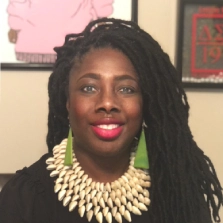
Letitia Price, DMSc, MCMSc, PA-C
Dawn O’Reilly is a Senior Medical Science Liaison in Lung/GI Oncology with Daiichi Sankyo. She lives in North Carolina with her husband, 3 children and their spunky golden retriever. She is passionate about healthy living, playing outside with her kids, and she loves to travel.

Dawn O’Reilly, Ph.D., MMS, PA-C
Letitia Price is a Senior Medical Science Liaison in Oncology with Gilead Sciences, Inc. She is a Tik-Tok background dancer for her niece and goddaughters. She is an avid traveler, foodie, and baker. Her specialty is poundcakes, for which she keeps her grandmother’s recipe under lock and key.
Please note the views and opinions expressed in this article are our own and not intended to reflect the views and/or opinions of our employers Gilead Sciences and Daiichi Sankyo.
Have an opinion on this article? Send a message to the editor.