The job of the cover letter is to get them to read your resume. The job of the resume is to get them to invite you to an interview. The job of your “Capabilities Profile” is to place you in their mind as uniquely qualified. The job of the interview itself is to let them know that you are their one and only best hope to solve their problems, to optimize their relationships, and to add to the team in a cooperative way.
Every interviewer arrives with a list of prepared questions. But the questions that often determine the outcome are the ones that never get asked.
As the conversation unfolds, the interviewer is silently deciding:
- Can you help us solve our main problem?
- Are you easy to work with?
- Can I trust you?
Who are you beyond your résumé? Do I want to work with you every day? This article is designed to help you think differently about the interview process: how do I think about myself, how do I come across, and how can I make myself and my skills distinctive.
In short, how can I answer the questions they will never ask? The questions that will help me secure the job no matter how many others are competing with me.
One component mentioned earlier was your “Capabilities Profile”. In our work with pharma and with healthcare executives, securing a new job is often seen from an academic lens. Where I graduated, what degrees, what other companies I’ve worked for, etc. When you are in front of the hiring team, they are probably already confident that you can learn the science and their version of the MSL role based on this lens.
We’ve noticed lately that resumes are seen as a ‘past’ document…they chronicle what we have done. But today’s market wants more to know what you have done, they want to know and be assured in this interview what you can ‘do’. Therefore, it can help to include the “Capabilities Profile” in your resume early, perhaps after the education section or right at the top so you can draw the hiring manager right to the capabilities that set you apart from the others. The education section is vital as a connector both in terms of the school’s reputation and the affiliation with the alumni network. We like those who have graduated from our place!
Your “Capabilities Profile” allows the reader to dream instead of scan. Remember the interviewer is wondering whether you can solve their problems, whether you would be a wild card or a trusted asset with KOLs, whether you are collaborative and respectful, and whether you can help move the team’s goals forward.
They’re also quietly evaluating whether you can communicate effectively up, down, and across the organization, and how quickly you can learn the product, understand the business, and make an impact in the field. The reality is that they are unlikely to ever ask these questions directly, but they are constantly looking for the answers.
Here is a sampling of what the “Capabilities Profile” section of the resume would look like:
- Precise and deliberate in communication of difficult or complex ideas. Mode as well as style of communication reflects thoughtful consideration of receiver perspective.
- Works as an _________, __________, and leader with colleagues up, down, and across the organization.
- Proven ability to work cross-functionally with ____________________ to develop and execute research processes designed to highlight the ____________________ benefits.
- Experienced in working collaboratively with external parties, such as ____________________, for the purpose of ____________________.
We especially like these:
- Proven ability to effectively manage up, down, and laterally, across solid as well as dotted line relationships.
- Understands the priorities of the administration as well as clinical colleagues to effectively bridge the gaps that can often develop.
*And here is a secret that will give you an advantage. Everyone reading this will say, “Mmmm, good idea.” And then they will do nothing with it. They will rely on the same old resume. You, however, could be the one to add it to your resume. And then who will stand apart from the rest? (Trust us on this one.)
Prepare to address questions about these statements and be poised with examples.
These are very general statements, but they cut to the heart of the reader who has heard thousands of interviewees and their resumes screaming how “passionate” (PS: avoid this well overused word) or how “dedicated” they are, etc. Don’t billboard yourself with easy mottos, instead lay claim to the real issues in organizations: communication, cross functionality, relationships with external parties, etc.
And there are more (contact us for a full list).
One way to engage is from the start. Almost every interview begins with “Tell us a little bit about yourself.” They already know about you since the resume is right in front of them. Instead of recapping it, like everyone else will, you can be different by asking them a question: “Would you like to know something that is not on my resume?” Note here you have psychologically switched the chairs, you are asking them a question that they have to say “Yes” to. Your answer might be a story about your work with Mother Theresa, or your experience in Antarctica, your job as a wrangler at a guest ranch, how you took the MCATS three times (!) and still got into med school, or even what you have learned about your work with endangered turtles, following migrating caribous, first time holding a beating heart in your hands. Now you have their attention…and you have created a memory…and you asked them a question!
And like all the following questions, when you answer or use a story, consider ending with “And what I learned from that was.” This response continues to engage them with who you are, how you think, and what drives you.
As we all know, science is only half the equation when you’re in front of a KOL. Our contact with them has to include our uniqueness which includes our confidence, our engagement, and of course whether they like us! We have precious little time to connect, otherwise we are a forgotten 15 minutes.
The same is true with the interview. If you only show up to answer questions you will be like everyone else. When you engage as a conversationalist, then you are a memory maker.
Another preparation technique to consider is a method some football coaches use. That sheet of paper they are always referring to is often called a play card. All of the game information, plays, changes, names are on that sheet…and they also use it to cover their mouth to avoid those who can read lips!
Divide a paper into four quadrants.
- One quadrant has a few prompts, just a word or two, to remind you of a story or example you want to remember to use for behavioral questions or to support your capabilities statements.
- A second quadrant has your statistics, measures, percentages.
- The third with perhaps your accomplishments, including your interpersonal accomplishments.
- The fourth with the words and phrases you want to remember to use…perhaps from their website (be careful not to be too obvious), some medical verbiage for their drug, etc. Some have used this quadrant to refer to their 90-day plan. Interviewers like to know that you are ready to go from day one and can demonstrate forward thinking.
You can use this paper as a prep for either face-to-face or online interviews. Just enough to avoid trying to memorize everything and helping to diversify the examples you use to show breadth and depth. Don’t exaggerate or embellish your experience, you’re enough (remember, they selected you for the interview). Use stories and metaphors to highlight those transferable skills you bring to the table.
So, you have your cover letter, your resume with your “Capabilities Profile”, your research about the company and the role, and now you are in the interview. Relax knowing the questions they don’t think you know, the ones they are not asking you but asking silently to themselves. These very quiet questions will be answered by your unique prep and understanding of what is going on here, what is ‘really’ going on here.
Oh, and at the end, when they ask if you have any questions, respond by summarizing what you have learned about the job and the team and…. ask for the job! We can’t tell you how many interviewers have told us: “They seemed great but never asked for the job.” Ask!
Here is one more tip.
The product of an interview is the data that is me and the responses they hope to hear. What is vital, however, is the ‘product of the product’ which is what they leave the interview with, how enduring your presence is, how you connected not from your resume but from your essential you. After ten interviews that day, will they remember you? (One of our clients found out later that her interview surfaced when someone said, “Who’s that one with the 23 brothers and sisters?” Yes, mom just kept adopting kids! She used that memorable piece of her story to assure the interviewing team that she knew how to handle conflict!)
Securing the interview is the end of the beginning of a job hunt and feels fraught with pressure for perfection in the eye of most candidates. Preparing is key… know the company, the science and the role. But it’s more than that, and the good news is that what interviewers want is for you to be yourself.
The bigger question for them is how well you can, and will fit into the team culture, or how you may fill a skill or experience gap of the current team. This is not an “exam” so there are no right or wrong answers, this is an opportunity to be your best self and through a bidirectional conversation really demonstrate who you are. In short, you’ll be giving them a real-life picture of you in action.
Anxiety will be normal. And most of us have passed plenty of tests for our degrees. Passing the job test is different. The interviewer wants to know you beyond your smarts…they want to know just how you use those skills to bring wisdom to the team and to their KOLs.
Your goal is to learn more about the company culture the team needs, and if you’re the right fit. Working at a company where the culture aligns with your values and skills should be prioritized. Be ready with questions that indicate your curiosity and listen to what is said (and not said).
Learn more what the company culture supports and when possible, ask about it (“It sounds as if your company culture is highly patient focused.”)
- For the MSLs on the team that are thriving, what sets them apart?
- What is the biggest challenge the team is facing now and will face in the next year?
- What has kept you at this company?
Do your values align with the company’s focus?
- How is the company engaging patients as partners?
- How does the company support ongoing learning for MSLs?
Frame your questions to show you have prepared for the interview.
- I reviewed the corporate “About us” page and was intrigued by XX. Can you tell me how your team aligns to that?
- I reviewed the pipeline information available and suspect your team will be supporting XYZ, can you describe how your team supports the pipeline and clinical trials?
How can you give them confidence you’re the person for the job?
- Be yourself. Breathing helps!
- Don’t exaggerate or embellish your experience: be socially aware. What answer seemed to engage them, bore them, how is their eye contact, etc. Extroverts have to be careful not to be ‘too’ much and introverts need to ‘ramp up’ a bit from time to time. Match their mood and manner.
- Answer the question that was asked. If you’re unsure, ask for clarification. Not only does this ensure you understand the question correctly, but it also gives you a moment to organize your thoughts. It’s perfectly acceptable to say, “I don’t have all the details, but here’s how I would approach the situation.” Interviewers are often more interested in how you think, solve problems, and structure an approach than in whether you immediately know the “right” answer. Never say you don’t know…instead demonstrate your ability to think aloud.
- Be concise (leaving more time for additional questions)
Remember this is an interview so don’t overlook the basics…
- Dress professionally, for every interview and for every interviewer.
- Virtual interviews require a professional setting (be cognizant of your background)
- Turn your camera on and make eye contact with the camera (not your screen). This will be an immediate disqualifier since not looking at the camera is the equivalent of not having eye contact in person.
- Record a Zoom call with yourself. This is better than practicing in the mirror. When we look in the mirror, we see what we want to see. Zoom shows us what others see.
Answer questions with professional examples and language and then go quiet. Don’t talk too much. Be especially careful of going on and on and on. They quit listening after the first 30-60 seconds if it appears you are not listening to their question. Smile. Check what that looks like on your Zoom call.
In summary, these two vital additions to your resume, the Capabilities Profile and an understanding of the Product of the Product will prepare you in a special way for what today’s interviewers are thinking and deciding. If you can understand how someone thinks, you are way ahead of the game.
Contact us at any time.
About the authors:

Kim Cremers, PharmD, ACC
Kim is a licensed pharmacist with over 25 years of experience in medical affairs within the pharmaceutical and biotech industry. Throughout her career, she has demonstrated success in leading medical affairs teams across six companies, handling products throughout their lifecycle and spanning various therapeutic areas. Presently, she utilizes her extensive background as an external consultant, aiding organizations in the development or enhancement of their Medical Affairs capabilities, specifically MSLs.
As the Founder and CEO of Petrichor Coaching and Consulting, Dr. Cremers provides strategic guidance, planning, training, and executional support tailored to organizations seeking to establish, optimize, or expand their MSL team. Aligned with her passion for teaching about the pivotal role of pharmacists within the industry, Dr. Cremers has developed and teaches “Introduction to the Pharmaceutical Industry” to graduate pharmacy students providing comprehensive insights spanning the drug development continuum, from early-stage development to Medical Affairs, including the role of our commercial colleagues. Kim partners with Kevin O’Connor to provide insights from the PharmD and Executive Coach on the art of being an impactful MSL.
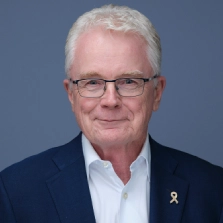
Kevin E. O’Connor, CSP, CEC
Kevin is an executive coach, professional speaker and teacher. Kevin holds three Masters degrees and his expertise focuses on scientific professionals who are charged with leading and influencing medical professionals. He teaches graduate students at Chicago’s Loyola University, is faculty for the American Association for Physician Leadership (AAPL) and the American College of Healthcare Executives. (ACHE). Kevin partners with Kim Cremers to provide insights from the PharmD and Executive Coach on the art of being an impactful MSL.
Have an opinion on this article? Send a message to the editor.