The worldwide engagement of our organization UniversityGoGlobal necessitates the multidisciplinary involvement of the authors in the strategic formation of alliances and partnerships in the USA, India, Europe, and Africa. These relationships bode well for the rich exchange of scholarly, scientific, and consumer research, and the sharing of knowledge, in the fields of biomedical, regulatory affairs law, the arts, and sciences, to academic research. Staying at the forefront of such initiatives is rewarding, as it places us in direct dialog and discourse with Thought Leaders, Key Influencers, Subject Matter Experts (SMEs) educators, students, and consumers globally. It may not be unreasonable to say that by sheer engagement with these diverse audiences, we are fortunate to be able to have some say and influence from early childhood to maturity and adulthood, or expressible with the well-worn phrase, veritably, from womb to tomb!
Among the important activities of UGG, are as facilitators of discovery, in global scientific research. This entails closely liaising and interacting within our international involvement in clinical research, patient attraction to India and the USA. We are witness to trends shaping these industries, especially in being a part of contributors who we present to the hierarchy of decision-making in institutions, and see the factors, data, and trends that underlie the pursuance of, or abstaining from the making of strategic choices. In this article, some of the remarkable trends in the continuum of strategic choices are presented in our global business development of clinical and biomedical research, with teaching institutions and hospitals, holding the interest and capabilities to undertake research. Furthermore, our roles seamlessly blend as Medical Science Liaison professionals, with our regulatory affairs, and legal expertise called into play. These functional areas intertwine with each other and are valuable in business development, and in the service of humanity. From our recent MSL engagement, here are the three significant realities we observe in contemporary biomedical research and healthcare, from our first-hand experiences.
Reality 1: The Cross-Functional Decisional Hierarchy Trend
An important and discernible trend in Regulatory Affairs and MSLs, for us, is in seeing that institutions in the Indian conglomerates of hospitals are usually administratively headed by pure business leaders, ostensibly recruited from leading business schools. The strategically minded leaders are penchant to view clinical opportunities from economic revenue generation perspectives primarily, and then across other clinical and operational spectra. While arguably the raison-d’tre of hospitals is profitability, and sustainability, with optimal patient care and image building, solely viewing a proposal from economics may and at times be fraught with missing potential opportunities. There yet, often lies a tendency to not entertain proposals if the perceived business potential is not strikingly clear at first blush. That may be a predicament, as missed opportunities are often regretfully rued with the passage of time. To overcome this one-person decision, from the institutional perspective, which may be avoidable, frequently as seen in our experience, is a discernible trend for balanced team reviews by clinical, administrative, business, and operations committees that examine the viability and potential of proposals. The rationale is clearly to ensure opportunities are not overlooked.
The balanced prudence invoking different functional heads can hardly be faulted, as in the industry clinical, ethical, economic, and regulatory missteps and fallout can be debilitating. The review by medical teams in hospitals therefore makes it incumbent and vital for the MSL professional to similarly, also prepare to present at the opportune major meetings, with a multi-faceted team. Such may be the changing face of business, as could subscribe to the notion that the collective wisdom of a team is better than the individual brilliance of one, perhaps rightly so.
Reality 2: A Game Changer in Healthcare – 5G Technology,
In the credits for this article, the name Natasha Parashar is featured. She is the Global Brand Ambassador for UniversityGoGlobal and is drawn into our pursuit of expanding the boundaries of knowledge and innovation globally, with her strong background as an Electronic Engineer, in which the adventurous spirit in the outdoors manifests in doing good for global humanity. As perhaps strongly advocating for multi-faceted and multi-disciplinary teams in our MSL engagement in science and biomedical research, we include Natasha with her philanthropic mindset and fondness for technology in our discussions and endeavors in procuring clinical research contracts. Our clients have also always been appreciative of the futuristic discussion she presents.
We are in the business of patient attraction to hospitals in India and the USA, for patients seeking state-of-the-art competencies, quality of care, and value for money. As a 5G expert in the telecommunication industry, she was recently able to convey the value of the 5G latency of 1ms (milliseconds) which is 10 times faster than 4G technology, making it possible in real-time even for surgeries being supervised by an expert in another country, or in the accuracy of hair-transplant in Robotic surgery, to minimize the risk of complications. The philosophy in the inclusion of an Isaac Asimov or Jules Verne, and innovators in our team is found valuable for understanding the burgeoning scope and application of technology. For example, with the clamor for artificial intelligence universally, has led to Natasha negotiating a contract to train students in Nigeria, delivered from India. In the future, those trained in AI there, can be exponents of emerging technologies in AI, ML, and data science, contributing to healthcare, forestry, mining, and other areas of human optimization. The AI competency is expected to serve thereby in Nigeria to reduce unemployment, with the groundwork for a first of its kind venture coming to anticipated fruition, and laid by core and non-traditional MSL work.
Reality 3: Regulatory Scrutiny and Staying Abreast of Emergent Trends
Our global and multi-disciplinary enablement owes it to the fortuitous era of asynchronous possibilities in computer and internet-mediated communication technologies, to be able to advise on regulatory and clinical standards. The harmonization efforts to realize a set of uniform global regulatory standards have proven elusive with the complexities arising from different laws and regulations worldwide. The reverberations of the USFDA are arguably felt across regulatory bodies across the world, for their Gold Standard advice, which is considered worthy of faultless emulation. It is safe to say that the patient-first mantra of guidance is seen in Indian regulatory agencies as well and underlie informed decision-making in clinical care and drug discovery efforts. Keen to be a part of stringent ethical foundations as contributors to science and discovery from the USA to Asia and Africa, our engagement as concomitant Regulatory Affairs and legal advisors has proven beneficial for the degree of assurance in the duality with clinical research knowledge provided, to administrators, and is a key selling point in liaison efforts.
In India, one of the important regulatory bodies is the Indian Council of Medical Research (ICMR). The recent guidelines emanating from the ICMR’s Expert Group, denote cautious application and adoption of Artificial Intelligence-based technologies in biomedical research and healthcare delivery. as the implications seem of super promise yet are like stepping into the foreboding unknown. The potential of AI-based technologies in healthcare, for hospitals, and research institutions, presents immense scope, yet the overly enthusiastic expectations must be tempered down, for human intelligence can never be replaced, arguably and hopefully. The many clinical, regulatory, and ethical dimensions across the applications of AI, in health care and research, diagnosis, screening, regular and therapeutics, and preventive treatments, may pose challenges across the continuum of clinical decision-making, however, the future of AI technology and machine learning (ML) is assured. It offers new hope in the discovery of myriads of applications conducive to improving human living.
Concluding Thoughts
In our ongoing efforts to bring new opportunities in Clinical research to India, we have found it essential for our MSL efforts to study the Indian European, British, US, and USFDA regulatory guidelines broadly. However, AI is fascinating in terms of what the future holds, and the dos, don’ts, and caveats need constant vigilance, for such is the rapidity of constant change in emergent technologies. The meteoric rise of AI in every facet of personal lives (many may say regrettably) holds vast potential if used as exploratory initially, and thereafter, admittedly, only once the results are vigorously tested and verified, with greater precision and specificity. Predicting that AI will be a transformative game changer for the world within the next five years (Valinsky, 2024), is a foregone conclusion. Who would want to disagree with that, for even Bill Gates, the man who forsook Harvard, predicted the future. and profit is “bullish on artificial intelligence”. It would simply be foolhardy to go against the predictions of one of the world’s greatest ever visionaries.
References
- 5G in healthcare market to reach USD 3667 million by 2026. (2023, February 28). Medical Buyer.
- Valinsky,, J. (2024). Bill Gates explains how AI will change our lives in 5 years. CNN. Retrieved from https://www.yahoo.com/finance/news/bill-gates-explains-ai-change-144546686.html
About the author:

Lionel de Souza, LL.B. LL.M. Dip. Can. Law. MBA. MACPR. PhD.
Dr. de Souza is the VP of UniversityGoGlobal an organization that creates Worlds of Opportunities in biomedical research. He is engaged in creating new opportunities globally for pharmaceutical/device companies, CRO’s and other entities in the biomedical research landscape (www.intellectualaspirations.com), with one goal of expanding the frontiers and boundaries of knowledge and innovation globally! His substantive experience as an MSL is with experience in marketing to hospitals, universities, and medical practitioners in the United States, Canada and India. He leads global strategic operations spanning international trade regulatory affairs is engaged in the development of biomedical research, regulatory affairs/law, and education worldwide.
Dr. de Souza is also the VP of Global Caring for Humanity and the President, North America of Humansky Association (approved by the Government of India, Corporate Affairs), an organization committed to the protection of Human and the inalienable rights of Life, Liberty and the pursuit of Happiness. In the course of his distinguisher academic and professional career, Dr. de Souza has been at the forefront in upholding human rights and advancing the cause of Diversity, Equity, and Inclusion (DEI). Dr. de Souza has an outstanding record in helping African Americans, Asians, Africans, US citizens, and minorities of all ethnicities and nationalities, academically and professionally. Immersed with passion in global higher education development. He is actively involved in advancing the healthcare and educational needs of deserving populations worldwide.

Dr. S.M. Rajan, Nagpur, India
Dr. S.M. Rajan is one of the foremost Constitutional law experts in India. A distinguished academician and heading a leading law institution, he is also the President of USWorldLaw & InWorldLaw, which are law firms offering legal services to domestic and international clients, as well as Global Caring for Humanity. His expertise is valuable in facilitating projects of Scientific and Biomedical/Clinical Research and Discovery from the USA to India, using his vast and unparalleled knowledge of Indian Law, Legal/Regulatory laws, and compliance with Indian pharmaceutical and device regulations, with the understanding of US Food and Drug Administration (USFDA), European, and Global Standards in drug/development, patient rights, industry trends and marketplace dynamics of the healthcare field.
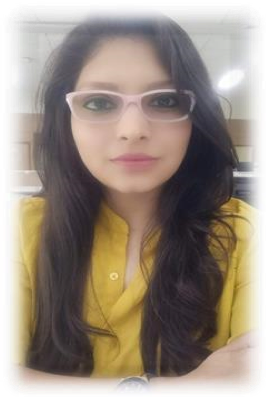
Natasha Parashar, Mumbai, Nagpur India
My name is Natasha Parashar, and I am a resident of Mumbai, India. I am the Global Brand Ambassador for UniversityGoGlobal in India and its subsidiaries, USWorld Law, and IndiaWorldLaw. As an engineer by profession, I hold a bachelor’s degree in electronics engineering. In my professional career, I have 14+ Years of multifaceted professional global experience with leadership roles in the telecommunication sector in India and the Medical Sector in UAE-Dubai. My professional roles in management and business development have included Bangladesh and Nepal, involving project and technical management, operations, and business development in telecommunications. I have also been actively involved in marketing and business development in UAE (Dubai) for a leading Plastic Surgery conglomerate. I am an Actor and a National Level Cricketer. For over seven years, I have contributed to the Mission and Purpose of UniversityGoGlobal, USA executing Global Strategies in the areas of Biomedical Research, Pharmaceutical Development for exports and Contract Manufacturing, Business Process Outsourcing, Technological Innovation, Law/Legal Services, and University and School Educational Development.
Have an opinion on this article? Send a message to the editor.