Introduction: The Traditional Conflicts Between Marketing and Medical Issues
The pharmaceutical industry has evolved considerably in recent decades, transforming from a model focused exclusively on the research, development, and commercialization of drugs to a complex ecosystem where science and commercial strategy are forced to work together. However, this evolution has generated significant structural tensions, particularly between marketing departments and medical affairs which have resulted in operational inefficiencies and conflicts of interest that limit the potential for innovation and, ultimately, in maximizing and optimizing the use of new medicines.
We can find many examples of these conflicts in the literature. These are not merely operational, but reflect fundamental differences in objectives, evaluation metrics and most seriously, a chronic blindness that prevents us from seeing and assuming how the combination of these functions allows us to maximize and optimize the company’s results.
A paradigmatic example of these conflicts arises in the role of Medical Science Liaisons (MSLs). MSLs are scientific advisors and communicators who provide objective medical-scientific information in a reactive manner, while the sales representative’s focus is commercial and promotional. In practice, however, this tension manifests itself particularly acutely when marketing teams sometimes push for traditional business metrics that are incompatible with the role that defines the MSL role.
Marketing departments traditionally focus on business metrics such as market share, sales volume, and return on investment, operating under the pressure of quarterly results and growth targets. On the other hand, medical affairs works to provide unbiased information to opinion leaders about pathology and the pharmaceutical solutions they work on; However, if pharmaceutical companies do not develop, establish, and convince themselves of adequate alignment policies between teams, they may find themselves in an ethically compromised situation.
The Emerging Paradigm: Medical Affairs as a Strategic Bridge
The Medical Affairs function has undergone a fundamental transformation, evolving from a traditionally reactive and supportive role to a central strategic position. The Medical Affairs role in pharmaceutical companies creates a unique opportunity to ensure internal linkage between Research and Development (R+D) and Commercial/Marketing functions, as well as manage external scientific engagements with multiple stakeholders.
This evolution has been particularly evident in the role of the Medical Advisor (MA), whose role and responsibilities continue to evolve. The MA is a hybrid office-field position whose primary mission is to foster collaborative relationships with key opinion leaders and catalyze the two-way transfer of scientific knowledge between internal and external stakeholders.
However, for this transformation to be successful, MAs require competencies that have not traditionally been part of their basic medical or scientific training. Understanding business strategies, market analysis, financial management, organizational leadership, and effective communication has become indispensable to effectively navigate this new ecosystem.
The Skills Gap: Beyond Scientific Knowledge
The traditional profile of the MA has been fundamentally based on clinical excellence and in-depth scientific knowledge. However, the current demands of the role require a sophisticated understanding of the strategic context in which they operate. To illustrate this fundamental transformation, it is essential to compare traditional roles with the emerging competencies that the modern business context demands.
Comparison Table: Medical Advisor Functional Evolution
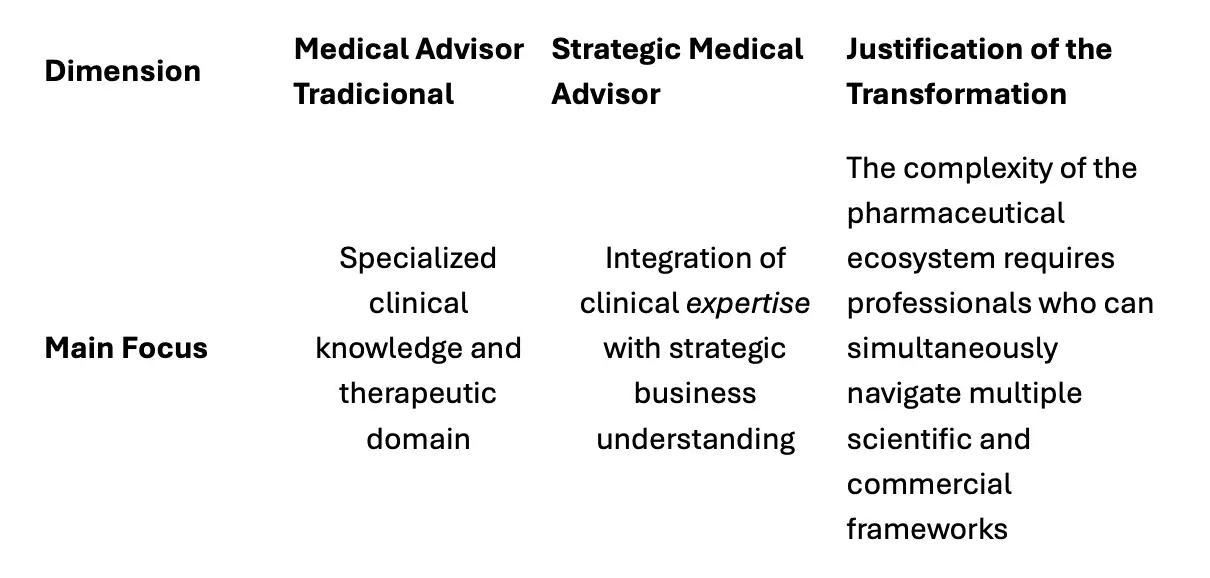
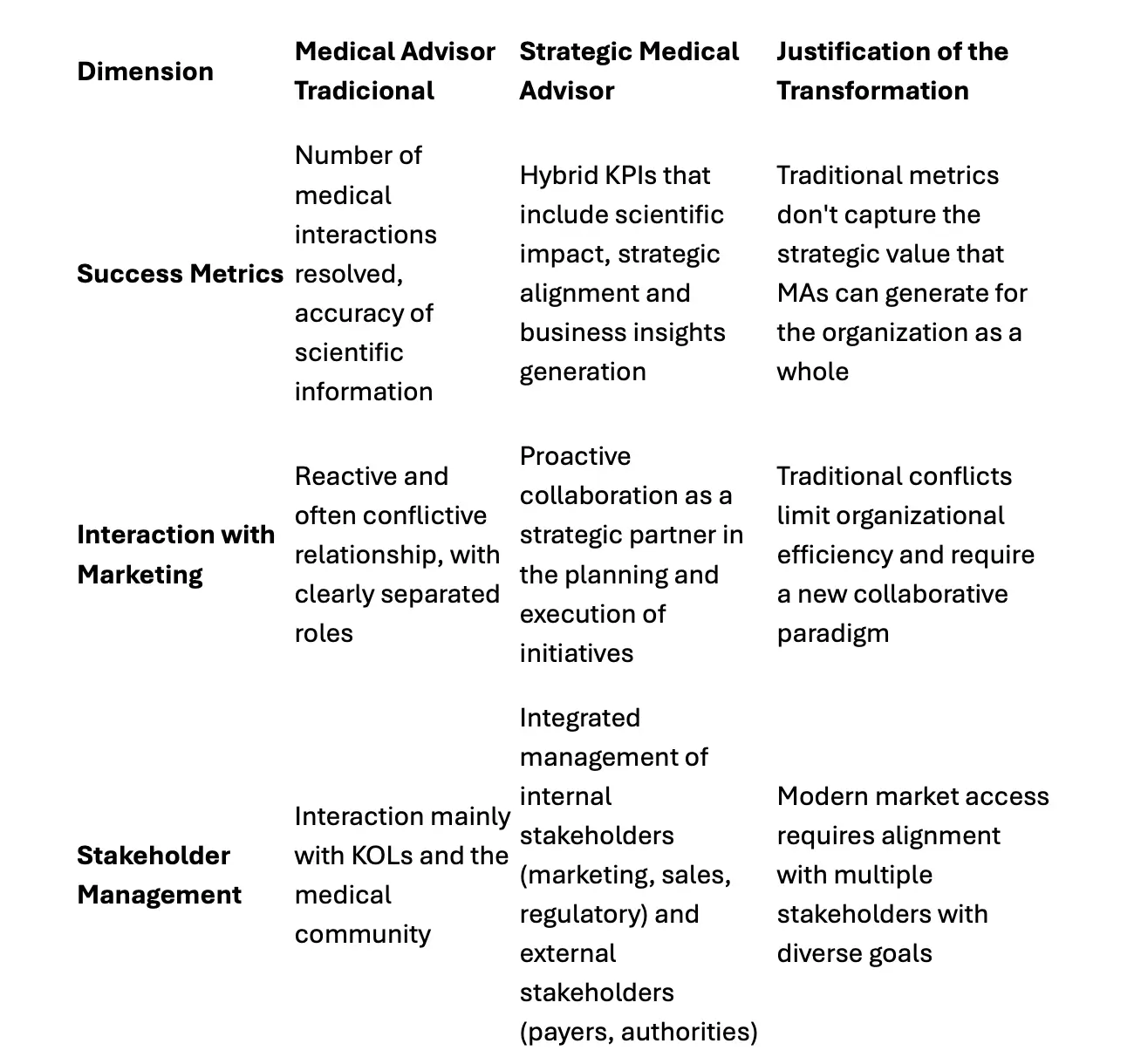
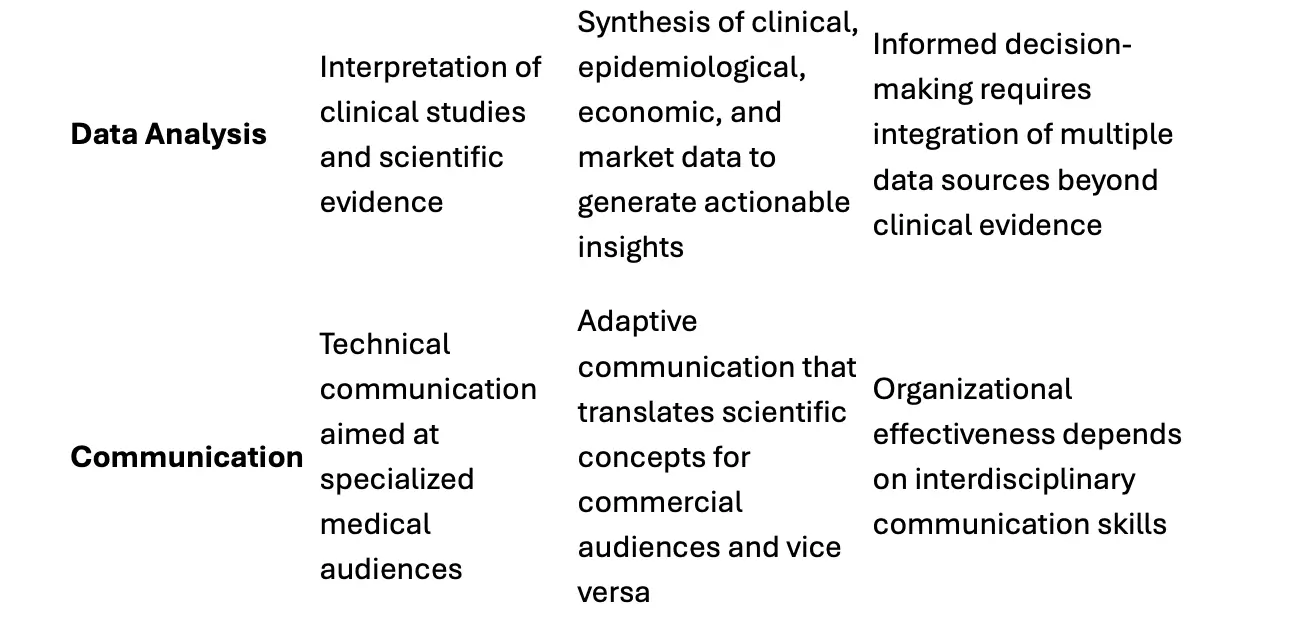
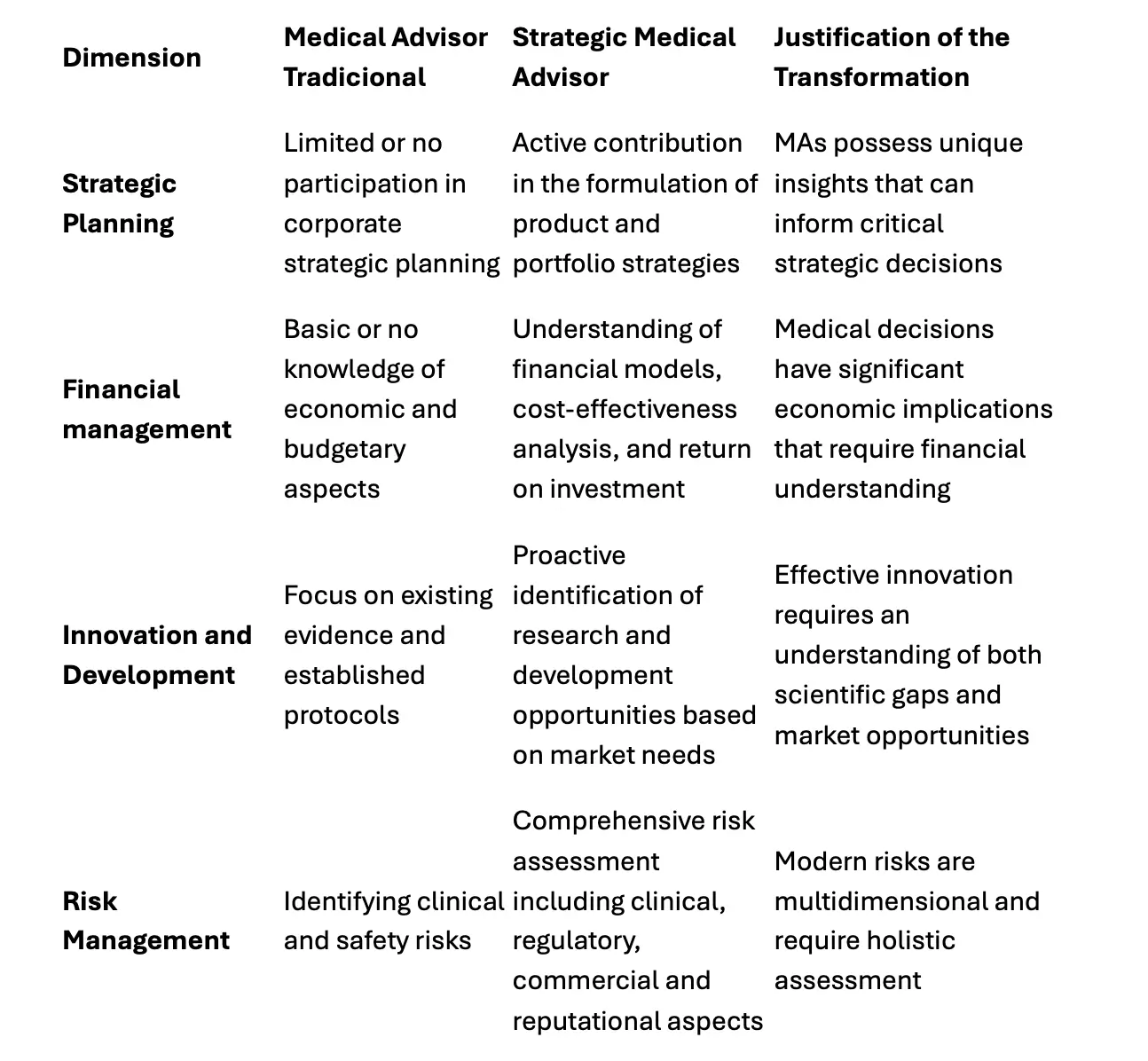
This transformation does not simply represent an expansion of responsibilities but a fundamental reconceptualization of the role of the Medical Advisor as a catalyst of strategic value. The rationale for each of these new competencies is based on the reality that the modern pharmaceutical environment operates as an interconnected ecosystem where scientific, commercial, and strategic decisions cannot be made in isolation.
The need for an integrated approach becomes particularly evident when we consider that traditional Medical Advisors, despite their exceptional clinical expertise, are often limited in their ability to generate organizational value due to their limited understanding of the broader strategic context.
The evolution towards the strategic model allows Medical Advisors to function as true business partners, capable of translating scientific insights into viable commercial opportunities and, conversely, interpreting commercial imperatives within appropriate ethical and scientific frameworks. This “two-way translation”
capability is particularly critical for resolving traditional conflicts between marketing and medical affairs, as it makes it easier to create shared goals and mutually beneficial success metrics. Since medical affairs is considered the “data custodian”, they need to know how to identify unmet medical needs of the relevant market, and fill in the gaps in the local medical literature by facilitating data generation. In addition to market research, the medical department can contribute by doing what is called medical research, collecting epidemiological data (incidence, prevalence), which can refine business forecasts/estimates.
This broadening of the functional scope requires specific competencies in business acumen that include an understanding of pharmaceutical business models, competitive analysis, stakeholder management, and the ability to translate scientific insights into strategic opportunities. The absence of these skills generates not only operational inefficiencies but also lost opportunities for value.
Business Acumen training: Critical components
Business acumen training for Medical Advisors must address multiple complementary dimensions that allow a comprehensive understanding of the pharmaceutical business environment. First, it is critical to develop competencies in strategic analysis that allow Medical Advisors to understand not only the positioning of their products in the market but also competitive dynamics, regulatory trends, and opportunities for innovation.
Second, training should include strong components of financial management and value analysis. Modern Medical Advisors must be able to assess the return on investment of medical initiatives, understand reimbursement and market access models, and articulate the economic value of medical interventions in terms that resonate with commercial and health policy stakeholders.
Third, competencies in stakeholder management and strategic communication are critical. To ensure that medical information specialists perform their role accurately and compliantly, companies must have robust training processes in place. This need extends beyond mere medical information to the ability to influence and align diverse internal and external stakeholders around common strategic objectives.
Transformational Leadership: From Conflict to Collaboration
Business acumen training represents more than just an addition of technical skills; it constitutes a fundamental transformation in the leadership model within the pharmaceutical industry. Medical Advisors equipped with these competencies can serve as catalysts for organizational change, facilitating the transition from conflicting models to collaborative paradigms.
This new leadership model is characterized by the ability to simultaneously navigate multiple frames of reference: scientific, commercial, regulatory, and ethical. Medical Advisors trained in business acumen can act as organizational translators, facilitating effective communication between traditionally siloed departments and aligning seemingly divergent objectives around common strategic goals.
Leadership transformation also involves a reconfiguration of success metrics. Rather than evaluating performance exclusively in terms of isolated scientific or business activities, the new paradigm requires integrated metrics that capture the holistic value generated through interdisciplinary collaboration and the creation of organizational synergies.
Implications for Organizational Development
The successful implementation of business acumen training programs for Medical Advisors has profound implications for organizational development in the pharmaceutical industry. First, it requires an institutional commitment to investing in talent development that goes beyond traditional technical training approaches.
Second, it needs a reconfiguration of organizational structures that facilitates interdisciplinary collaboration and formally recognizes the expanded strategic role of Medical Affairs. This can include creating permanent cross-functional teams, modifying incentive systems to reward collaboration, and establishing communication channels that facilitate the two-way flow of information between departments.
Third, transformation requires a cultural shift that values diversity of perspectives and competencies as a strategic asset. Organizations must evolve from cultures that reward close specialization to ecosystems that celebrate the integration of knowledge and the ability to generate value through the synthesis of diverse disciplines.
Conclusion: Towards an Integrated Future
The need for business acumen training for Medical Advisors is not simply a response to current competitive pressures, but a strategic investment in the sustainable future of the pharmaceutical industry. The traditional model of organizational silos and interdepartmental conflicts is fundamentally unsustainable in an environment characterized by increasing regulatory complexity, price pressure, and demand for comprehensive value evidence.
Medical Advisors equipped with strategic competencies represent a unique opportunity to lead this transformation, functioning as catalysts for organizational change and facilitators of new value creation models. Their unique position at the
The intersection of science and strategy makes them ideal agents to drive the evolution towards more integrated, collaborative, and effective organizations.
Investment in this training will not only benefit the individuals and organisations directly involved, but will contribute to the overall strengthening of the pharmaceutical sector, improving its ability to respond to global healthcare challenges while maintaining economic viability and continuous innovation. The future of the pharmaceutical industry depends heavily on our collective ability to transcend the limitations of traditional organizational models and embrace more integrated and collaborative paradigms of professional leadership.
References:
- Bansal A, et al. (2013). An insight into the emerging role of regional medical advisors in the pharmaceutical industry. Perspectives in Clinical Research, 4(3), 186-190.
- Bansal A, Singh M.. (2015). Role of a medical advisor in pharmacovigilance as a business support service. Perspectives in Clinical Research, 6(1), 16- 21.
- Chakraborty, S., et al. (2023). Value and Deliverables of Medical Affairs: Affiliate Perspectives and Future Expectations. Therapeutic Innovation & Regulatory Science, 57(6), 1234-1245.
- PharmaVoice. (2008). Medical Affairs-Marketing Connection. PharmaVoice, enero.
- Suvarna, V. (2021). Medical Affairs, Marketing, and Sales: The Triumvirate of Pharmaceutical Business. LinkedIn, septiembre.
- Pf Media. (2020). From conflict to collaboration: The marketing and medical affairs interface. Pf Media, agosto.
About the author:

Juan de la Parra, PhD
Juan is a Medical Affairs professional with solid experience in translational medicine and is focused on bringing strategic value to KOLs and patients.
He has participated in different drug launches in the field of neurology at Eli Lilly, GW Pharmaceuticals/Jazz Pharmaceuticals, and Angelini Pharma.
Juan earned his PhD in biomedicine from the Complutense University in 2017 with an abroad experience at The Hospital for Sick Children in Toronto (Canada). After moving to the pharma industry, he worked as an MSL in different projects of Medical Affairs, launching several breakthrough innovative solutions in the field of epilepsy, migraine, and rare diseases. Currently, he is Medical Advisor Neurology at Angelini Pharma, focusing on epilepsy, and as he is Director of a master’s degree programme for future MSLs at CESIF.
Have an opinion on this article? Send a message to the editor.