Medical Affairs has long been defined by scientific credibility. Accuracy, balance, and compliance remain essential foundations. However, in a healthcare environment shaped by data overload, increasing system complexity, and evolving stakeholder expectations, scientific excellence alone is no longer enough.
The question facing Medical Affairs today is not what we know, but how we translate knowledge into value. This shift is particularly relevant for the Medical Scientific Liaison (MSL), whose role is increasingly expected to move beyond scientific exchange toward strategic contribution.
This article proposes a practical reframing of the MSL role around three capabilities: value translation through insights, multichannel communication as connection, and transformation of knowledge into real-world impact.
Table 1. Evolution of MSL Capabilities from Scientific Exchange to Strategic Partnership
| Capability Dimension | Traditional MSL | Transitional MSL | Strategic MSL |
| Primary focus | Scientific exchange | Insight management | Value translation |
| Decision orientation | Accuracy and balance | Synthesis and patterns | Decision relevance |
| Engagement model | Predominantly face-to-face | Multichannel presence | Multichannel orchestration |
| Knowledge use | Information delivery | Knowledge integration | Impact-driven initiatives |
| Organizational role | Reactive support | Proactive contribution | Strategic partnership |
The evolution of the MSL role reflects a shift from information delivery toward strategic value creation, requiring advanced analytical, communication, and systems-thinking capabilities.
From Insight Collection to Value Translation
Insights are often described as the “currency” of the MSL. Yet, in many organizations, insights are still treated as static outputs rather than strategic inputs. The difference lies not in collecting more insights, but in interpreting them critically and connecting them to decision-making.
In an oncology setting focused on a specific solid tumor, repeated field interactions revealed a consistent challenge: clinicians were less concerned about efficacy data and more about treatment sequencing in complex, comorbid patients; an area insufficiently addressed in pivotal trials.
Rather than reporting these observations in isolation, the MSL integrated patterns observed across different hospital types, emerging real-world evidence, and variability in clinical practice driven by system constraints. This synthesis reframed internal scientific discussions, influencing evidence-generation priorities and shaping future medical initiatives.
The value was not in the insight itself, but in its interpretation and contextualization. This example highlights a critical evolution of the MSL skill set: data literacy, analytical thinking, and strategic judgment are now as important as scientific knowledge. The MSL becomes a translator of value, not merely a collector of information.
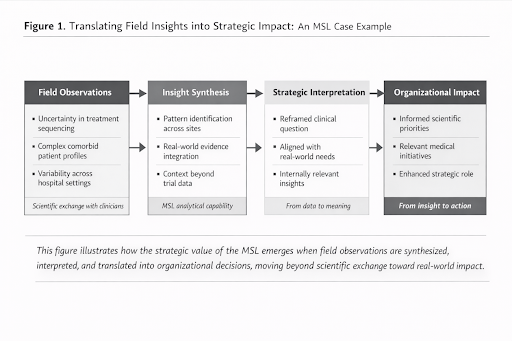
Figure 1 illustrates how the strategic value of the MSL emerges when field observations are synthesized, interpreted, and translated into organizational decisions, moving beyond scientific exchange toward real-world impact.
Communication Beyond Delivery: Connecting in a Multichannel Environment
Medical Affairs traditionally excels at face-to-face scientific dialogue. However, stakeholder engagement today is inherently multichannel, and effective communication requires more than replicating the same message across platforms.
In a rare disease context, where expert communities are small and time-constrained, relying solely on in-person interactions proved insufficient to sustain meaningful engagement. The Medical Affairs team redesigned its approach. Core scientific narratives were adapted into concise written formats for asynchronous use, while high-complexity discussions were reserved for deeper interactions. Digital touchpoints were used to extend—not replace—scientific conversations.
Equally important was a shift in tone. Communication moved from “explaining the science” to connecting science with clinical uncertainty, operational reality, and unmet needs. This required the ability to write with intent, adapt messages to different stakeholder profiles, and balance short-term interactions with long-term relationship building.
Multichannel excellence is not about presence; it is about orchestration. The MSL must understand when to engage, how to adapt the narrative, and how to maintain coherence across channels over time.
From Knowledge Accumulation to Real-World Impact
Medical Affairs sits at a unique intersection: deep knowledge of the molecule, the pathology, the healthcare system, and internal organizational dynamics. Too often, this knowledge remains fragmented.
In a chronic disease setting, variability in patient follow-up and outcome tracking emerged as a systemic challenge. Rather than positioning this as a purely clinical issue, the MSL acted as a strategic connector—aligning clinicians, hospital management, and internal teams to co-create a local improvement initiative.
The result was not a scientific exchange, but a tangible enhancement of patient pathways and data quality. Medical Affairs was perceived not as a support function, but as a credible partner in solving real healthcare problems.
This shift—from transmission to transformation—is where Medical Affairs delivers its greatest impact. Strategic projects related to data, pathways, or innovation represent a natural evolution of the MSL role beyond traditional scientific engagement.
Redefining Excellence in the MSL Role
The evolution of the MSL is not about abandoning scientific rigor, but about expanding relevance. Excellence today requires critical thinking, data fluency, advanced communication capabilities, and the ability to convert knowledge into collaborative, high-impact initiatives.
The MSL of the future is a translator of value, an orchestrator of engagement, and a catalyst for meaningful change. The real question is whether organizations are ready to enable this evolution.
Disclaimer: AI-assisted tools were used to support the drafting and editing of this article. All content was reviewed, edited, and approved by the author, who takes full responsibility for its accuracy and integrity.
References
Medical Affairs Professional Society (MAPS). Medical Affairs 2025: Strategic Evolution and Professional Capabilities. 2023.
Anderson A, et al. The Evolving Role of the Medical Science Liaison. Therapeutic Innovation & Regulatory Science. 2019.
Getz K. Real-World Evidence and Its Growing Role in Medical Decision-Making. Applied Clinical Trials. 2018.
Kotler P, Kartajaya H, Setiawan I. Marketing 5.0: Technology for Humanity. Wiley. 2021.
Harvard Business Review. Data-Driven Decision Making in Complex Organizations. 2017.
European Medicines Agency (EMA). Real-World Data and Real-World Evidence Framework. 2023.
About the author:

Eli Garcia
Eli Garcia is a Medical Affairs strategist and former Medical Science Liaison with more than 20 years of experience in the pharmaceutical and healthcare industries. She has held senior roles across Medical Affairs, scientific leadership, and strategic consulting, supporting organizations in evidence strategy, stakeholder engagement, and innovation-driven transformation. Eli is the founder of BE ON4Health and lectures in postgraduate and executive programs on Medical Affairs strategy, critical thinking, and scientific engagement.
Have an opinion on this article? Send a message to the editor.