Introduction
Imagine this: you walk into a meeting with a leading Key Opinion Leader (KOL). This person barely looks up from his phone, nods while you speak, and leaves you wondering—did my message even land? The very next day, you’re facing a player who insists on cost-effectiveness data, followed by a Digital Opinion Leader DOL asking for a visual summary he can share on his channel. Three different stakeholders, three different brains—and three very different ways of processing your message.
That’s where neuroscience comes in. For MSLs, understanding how the brain decides, filters, and builds trust can transform routine interactions into conversations that truly matter.
One Brain, Two Systems
Psychologist Daniel Kahneman describes two systems of thinking. System 1 is fast, automatic, intuitive—always on, but sometimes biased. System 2 is slower, deliberate, and effortful—more accurate, but harder to sustain (1).
Picture this: a payer under budget pressure leans on System 1 shortcuts, favoring “cheaper is safer.” A KOL, by contrast, slows down, activating System 2 to analyze clinical endpoints. Patient associations often combine both—the emotion of lived experience with the rational review of quality-of-life data.
For MSLs, spotting which “system” your stakeholder is using allows you to adjust short, intuitive cues for the fast thinker, or structured depth for the analytical one.
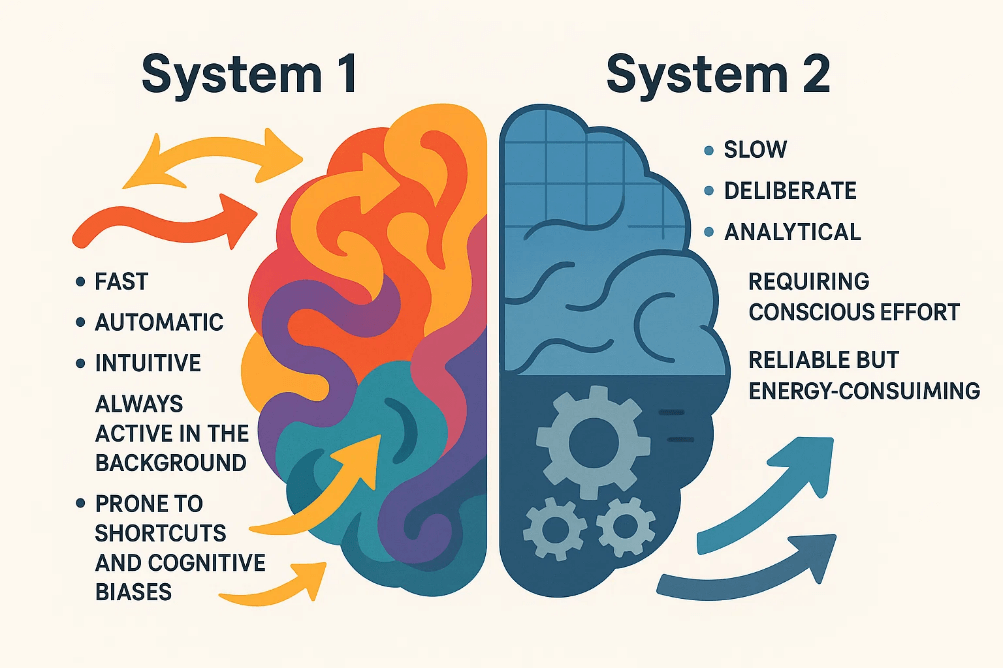
Figure 1. Schematic representation of Kahneman’s two systems of thinking.
Cutting Through the Noise
Every stakeholder is drowning in stimuli: physicians juggling back-to-back congresses, payers overwhelmed by health economics, DOLs scrolling through thousands of digital posts. The brain filters ruthlessly.
Here’s the MSL advantage:
- Open with something that resonates in their world—a patient story, a cost-saving figure.
- Use visuals; the brain processes images faster than text.
- Repeat your core message in scientific, practical, and emotional language.
Think of it like leaving mental “bookmarks.” When a DOL later shares your visual meta-analysis online, it’s because you made it memorable—and easy.
The Trust Hormone
Trust is not abstract; it’s biological. The hormone oxytocin reinforces human connection (2). But for stakeholders, trust takes different forms:
- For a KOL: your scientific rigor.
- For a payer: transparency and consistency.
- For a patient association: empathy and validation.
- For a DOL: being a reliable filter in a flood of digital noise.
The common thread? Authenticity. Admitting “this is still under investigation” often builds more trust than overstating certainty.
Biases Everywhere
Cognitive shortcuts shape decisions in clinics and online alike (3,7).
- Confirmation bias: a DOL may amplify information aligned with preexisting beliefs.
- Halo effect: a manager may judge a whole company through the “halo” of one bad drug experience.
- Loss aversion: a payer may cling to a suboptimal status quo out of fear of costly change.
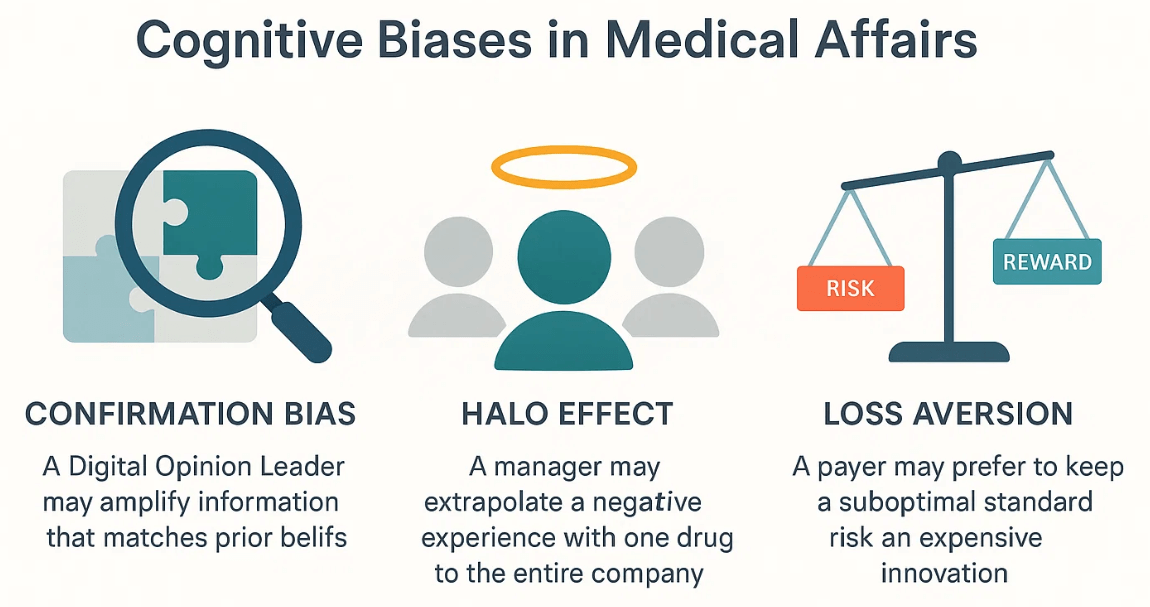
Figure 2. Common cognitive biases affecting Medical Affairs practice.
As MSLs, we can’t erase biases—but we can name them, reframe them, and gently open space for reflection. A phrase like, “It’s natural to trust what feels familiar,” lowers resistance and makes new evidence easier to consider.
Training the MSL Brain
Here’s the exciting part: neuroscience shows the brain can be trained. Exercise literally reshapes brain structures, improving memory and executive function (5). Mindfulness regulates stress and sharpens focus (3). Visualization—mentally rehearsing an advisory board or a payer negotiation—boosts readiness and calm (4).
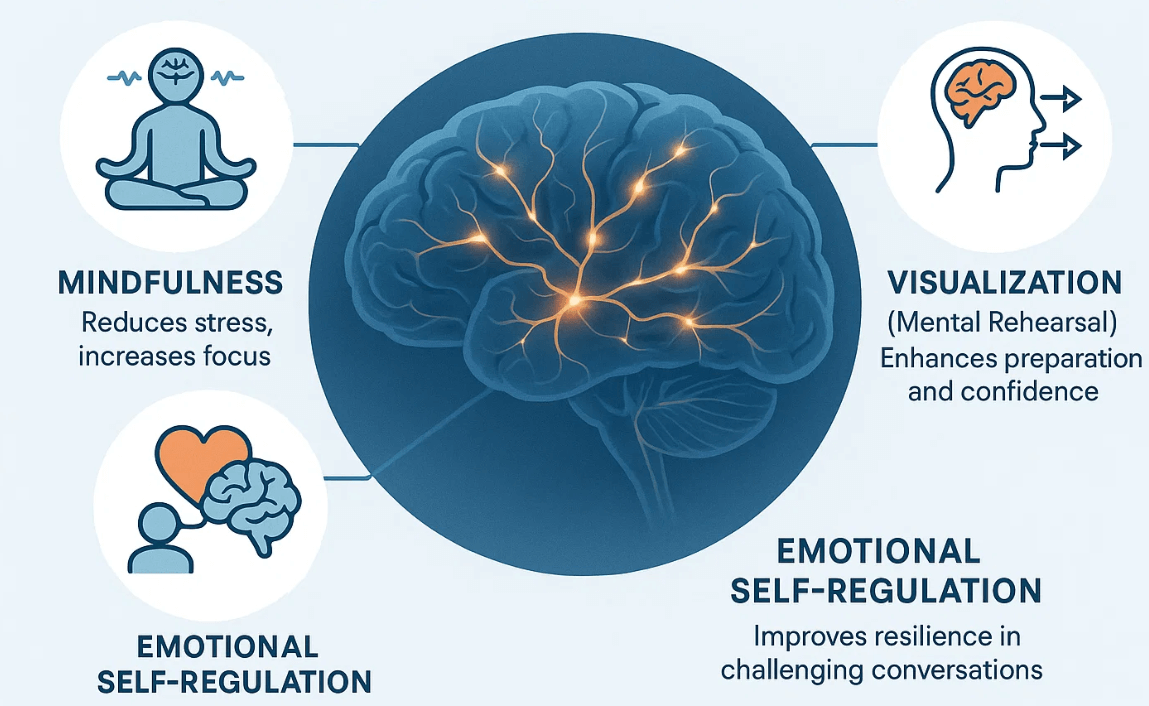
Figure 3. Neuroplasticity: training the brain for strategic impact in Medical Affairs.
Think of your brain as the most strategic tool you carry into any stakeholder interaction. Train it, and you amplify your influence.
Practical Neuroscience Tips
So how can you start applying neuroscience tomorrow in your daily work as an MSL? Here are six practical moves to sharpen your communication and influence with integrity:
- Read the mental mode. Notice if your stakeholder reacts quickly and intuitively (System 1) or pauses for deeper analysis (System 2). Adapt your pace and level of detail accordingly (1).
- Anchor in threes. The brain encodes information more effectively in patterns. Prepare three core messages and reinforce them in different ways—scientific, practical, and emotional (6).
- Listen with all your senses. Pay attention not only to words, but also to tone, pauses, micro-expressions, and gestures. These cues often reveal what the brain hasn’t verbalized yet (4).
- Reframe, don’t confront. Instead of challenging a bias head-on, open alternative perspectives: “What if we looked at it from another angle?” This reduces resistance and creates space for reflection (7).
- Prime your brain before the meeting. Mentally rehearse scenarios, objections, and your calm responses. Visualization strengthens confidence and reduces stress (3,5).
- Close with a mental signature. Summarize in one short, memorable phrase designed to stick—something your stakeholder can recall and even repeat to others (2).
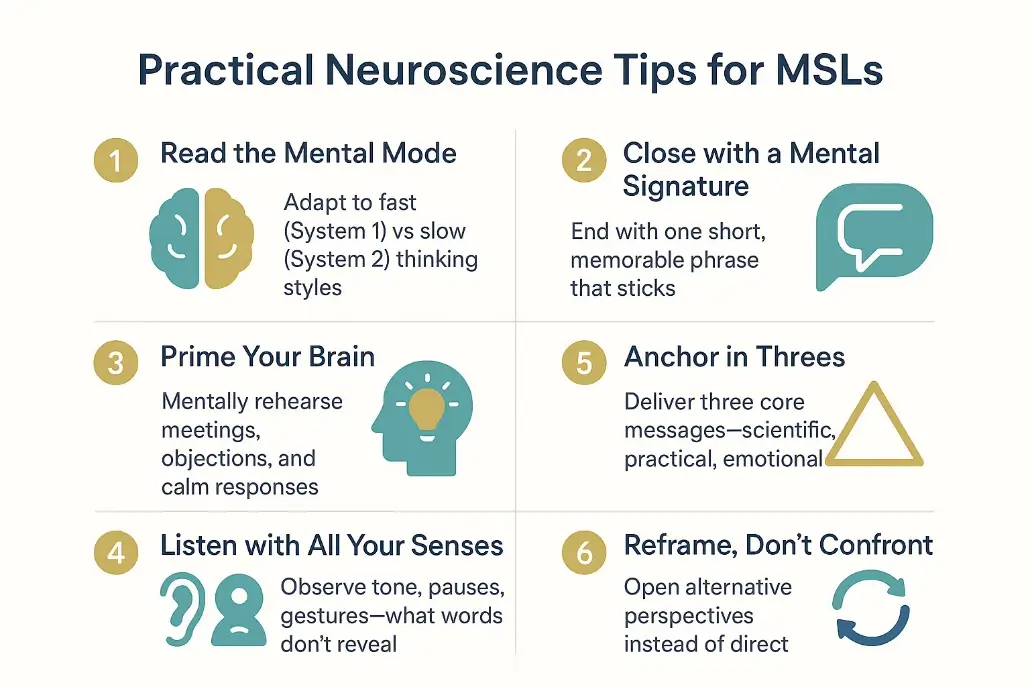
Figure 4. Neuroscience tips for the MSL’s daily practice.
In conclusion, the future of the MSL isn’t only about mastering data or digital platforms. The real differentiator will be understanding the human brain—how it pays attention, how it remembers, how it decides whom to trust.
Neuroscience gives us more than theory. It offers a compass: to influence with integrity, to connect authentically, and to help stakeholders make better-informed decisions.
Maybe that’s the hallmark of the next generation of Medical Affairs—professionals who combine scientific rigor with human insight, leaving every interaction not just informed, but transformed.
References
- Kahneman D. Thinking, fast and slow. New York: Farrar, Straus and Giroux; 2011.
- Morocho-Parra, G. D. L. Ángeles, & Valencia-Zamora, F. J. (2024). Mecanismo fisiológico de la oxitocina en el comportamiento humano y las emociones. Revisión bibliográfica. MQRInvestigar, 8(2), 1118–1132.
- Chiesa A, Serretti A. Mindfulness-based stress reduction for stress management in healthy people: A review and meta-analysis. J Altern Complement Med. 2009;15(5):593–600.
- Pessoa L. The cognitive-emotional brain: From interactions to integration. MIT Press; 2013.
- Revelo Herrera SG, Leon-Rojas JE. The Effect of Aerobic Exercise in Neuroplasticity, Learning, and Cognition: A Systematic Review. Cureus. 2024 Feb 11;16(2):e54021. doi: 10.7759/cureus.54021. PMID: 38476815; PMCID: PMC10932589.
- Cacioppo JT, Cacioppo S. Social neuroscience: Understanding the pieces fosters understanding the whole. Nat Rev Neurosci. 2020;21(12):713–24.
- Tversky A, Kahneman D. Judgment under uncertainty: Heuristics and biases. Science. 1974;185(4157):1124–31.
Martina Riosalido, MSc, Founder of MSL Expert & Mentoring® and creator of the MARIPOSA Method®, a transformational mentoring framework designed to empower the next generation of Medical Affairs leaders, is an international expert in Medical Affairs with over 18 years of experience in scientific engagement, medical strategy, and leadership.
Author’s Note: This article was developed by Martina Riosalido, MSc, with the support of ChatGPT (content structuring) and Sora (image creation). All materials were reviewed and validated by the author to ensure accuracy and strategic alignment with her expertise in Medical Affairs.
About the author:

Martina Riosalido, MS
Martina is the founder of MSL Expert & Mentoring® and creator of the MARIPOSA Method®, a transformational mentoring framework designed to empower the next generation of Medical Affairs leaders. With over 18 years of international experience in scientific engagement, medical strategy, and leadership, she integrates science, communication, and values-based leadership to strengthen the impact of MSLs across the pharmaceutical and biotech industries.
Have an opinion on this article? Send a message to the editor.