The transition from being part of a commercial team working in the sales-related function to the role of Medical Science Liaison (MSL) does not come without challenges. In the Middle East region, such a shift in careers is increasingly common in both local and international pharmaceutical companies. An educational background in pharmacy, science, and medicine is standard to join the workforce of these companies in this region. This article aims to share our experiences in the onboarding process of newly hired MSLs, establishing key performance indicators (KPIs), and closely monitoring their progress during the initial stages of this transition.
For the past 3 years we identified certain challenges, that sparked the need to create a framework, these challenges were:
- The lack of proper assessment for selecting the MSL candidates:
There were no standardized assessment materials to ensure a fair selection process to eliminate the bias, and provide objective outcomes.
- Mind shift:
The transition from working in the sales-related function to medical affairs proved to be of challenge to some, which needed interference to decrease the load of confusion as well as manage the expectations of involved stockholders.
- KPIs for MSLs
One of the challenges we encountered was the contrast between sales-related functions, where KPIs are directly tied to sales achievements and market share, and the medical affairs field, where the absence of concrete KPIs made performance monitoring more complex.
From our experience, we found that what makes the transition phase easier is to focus on the pain points mentioned and create an in-house system to address these challenges. We recognized that it is a learning journey for us, so self-monitoring and fostering a learning safe environment were essential to harvest our efforts’ seeds later.
1- Selection is key
Selecting the right candidate who can work as MSL is of paramount importance, those who have aspirations to join the medical affairs function would be the most appropriate, which can be visible through their work style, and personal development trajectory. We established an assessment based on real situations encountered in usual daily work, to assess how candidates will behave, and give them the opportunity to explain their rationale. add to assess their presentation, interaction skills, and ability to articulate their understanding of scientific materials.
2- Manage expectations
We observed that when an MSL joins, there is shock from the amount of training materials, and internal policy documents that need reading, and a state of confusion about what’s needed exactly from the role. We made sure to give the newly joined members time to read and digest the policy’s reading materials. We provided an environment of assistance and assurance while setting practical expectations.
3- KPIs setting
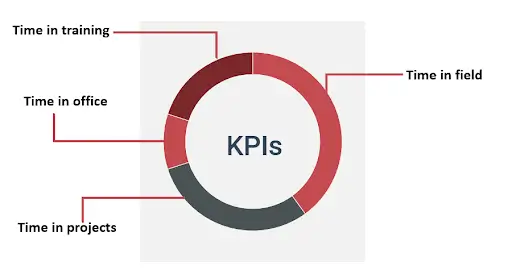
We tried to choose a set of KPIs that can reflect part of MSL effort in face-to-face and remote (online meetings) HCPs interactions such as:
- Time spent in the field: captured by reporting the interactions with HCP either in clinics, online meetings, and during scientific congresses.
- Coverage: the percentage of HCPs interacted with of the total list of HCPs
- Frequency: the number of interactions with the same HCP in a certain predefined period
- Time spent on projects: defined as time consumed in preparing slides, and materials.
- Time spent in training other colleagues.
- Office/admin time: defined as the time spent in the office for internal meetings.
After deliberate discussion and benchmarking, we reached a set of targets that can reasonably reflect the effort. Such target figures are flexible to accommodate the business model we operate. In our case, the MSL is responsible for multiple countries, which requires cross-border traveling, while the number of HCPs is not high due to the small population.
4- Start with end in mind
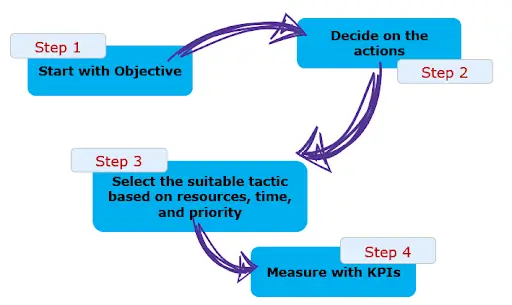
we encouraged and implemented thinking methodology of executing tactics. The model was very simple yet effective as in the table below. We need to start with the end in mind, once this is agreed upon, selecting the right tactic is decided accordingly. In the example we share: a competitor’s data was presented at an international congress, which can change the treatment guidelines in certain disease areas, with such consequences, we decided that
- Objective to be: obtain a clear picture of the local adoption of new data presented from Key thought leaders in a specific country/ region.
- Action was to collect actional insights from top key thought leaders to understand their perception of the new data
- Tactic: conduct MSL face-to-face survey to collect the insight among top 15 KTLs
- KPI: number of responses vs. invitation, number of insights, and quality of information to measure the performance.
5- Close coaching
The mind shift in creating an MSL narrative during the interaction with HCPs which is different from the typical sales focus visits, can be a challenge if close coaching is not established during the early weeks of on-boarding. This coaching and continuous feedback loop can shorten the transition period. In our experience, we were committed to offering this support by:
- Being present in the face-to-face HCP clinic visits.
- Provide feedback on the quality of the narrative and handling the different situations.
- Answering the questions as soon as they arise to lessen the confusion.
- Set periodic MSL excellence meetings to review the KPI’s status and monitor performance.
- Share best practices that can enrich the experience.
Conclusion
In our experience of the last 3 years, we found this methodology provided a structured onboarding approach, clarity of expectations, and a monitoring system that can be easily interpreted. This does not mean it comes with no limitations. The number can indicate a fraction of the total picture, yet there is still an important factor to consider. We strongly believe that the quality of scientific communication is the edge that makes the MSL role impactful and differentiating. We sincerely hope that our approach will be helpful to other colleagues in the industry.
About the authors:
Khaled Fahim
Medical Director
MERCK – Gulf
Amir Boshra
Senior Medical Manager&Head of Medical Excellence
Merck – Gulf
Have an opinion on this article? Send a message to the editor.