The Missing Ingredient in Scientific Success
In a profession that thrives on evidence, reproducibility, and rigor, one variable remains under-measured but over-influential: culture. For Medical Science Liaison (MSL) teams and broader life-science organizations, culture is not a soft metric — it’s the hidden force that determines how knowledge flows, how people behave under pressure, and how decisions get made when data is incomplete.
The Proof Is in the People
Across industries, research keeps confirming the same truth: values and leadership behavior predict performance.
– Gallup (2024): Only 20% of employees strongly feel connected to their organization’s culture — yet those who do show 9.8× higher engagement and 5× lower turnover.
– PwC Global Culture Survey: 72% of executives say culture directly enables successful change initiatives — and 85% of high-performing companies actively measure and manage their culture.
– Healthcare Meta-Analyses: Teams with strong values alignment report up to 30% fewer safety incidents and 20–25% higher patient satisfaction scores.
– Values Gap Research (Kang et al., 2023): Staff who believe leadership lives organizational values demonstrate 40% higher discretionary effort and 70% higher trust in decision-making.
These aren’t HR numbers — they’re performance multipliers.
Culture: The Silent Competitive Advantage
Think of culture as the operating system that runs your organization’s behavior code. When it’s coherent, consistent, and values-driven, people act predictably and ethically — even under uncertainty. When it’s inconsistent, even the most brilliant strategies stall in execution.
In healthcare, a “toxic” culture can cost millions: lost engagement, burnout, rework, compliance breaches, and reputational damage. The U.S. Surgeon General estimated workplace stress costs businesses over $300 billion annually in healthcare and turnover.
For MSLs, this translates into something even more valuable than money — credibility. Scientific trust erodes quickly when internal behaviors don’t match external values.
Leadership: Culture’s True Catalyst
Leaders shape culture more through what they tolerate than what they say. A values statement becomes real only when leaders are willing to make trade-offs — to choose integrity over speed, collaboration over ego, or transparency over convenience.
The data backs this up:
– When leaders consistently model organizational values, employees are 12× more likely to say their culture helps them perform.
– Conversely, when values are violated without consequence, trust — and performance — collapse faster than any market trend.
In MSL and scientific teams, leadership behavior defines whether insights are shared openly, whether dissent is safe, and whether collaboration or compliance drives the agenda.
The MSL Imperative: Operationalizing Culture
To make culture a competitive advantage, organizations should:
1. Define values as behaviors — turn words into observable actions that can be coached and measured.
2. Train leaders as culture carriers — not just as managers of projects, but as stewards of consistency and trust.
3. Measure the “culture delta” — the gap between declared values and daily reality. Close it through coaching, feedback, and recognition.
4. Embed psychological safety — especially in MSL work, where speaking truth about data and ethics can challenge hierarchy.
5. Link culture to outcomes — engagement, scientific credibility, speed of adoption, and compliance are all measurable culture effects.
Final Thought
In science, reproducibility is the ultimate test of truth. In business, predictability of behavior is the ultimate test of culture.
When values are clear, leadership is consistent, and culture is lived — performance becomes predictable. And in a world where trust in science and organizations is fragile, predictability is power
About the author:
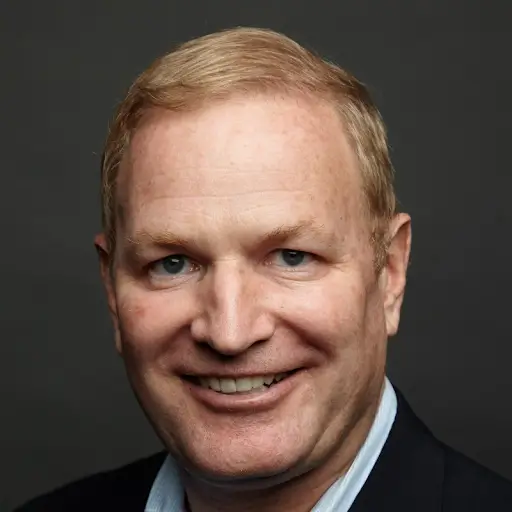
John Waid
John Waid is the Founder and CEO of Corporate Culture Consulting (C3), a global firm that works with organizations to build values-driven cultures that drive predictable behavior and performance. A sought-after speaker and author of Reinventing Ralph, John draws on leadership and sales experience at companies like IBM, PepsiCo, Nestlé, Pfizer, etc. to support CEOs and teams in turning culture into a lasting competitive advantage.
Have an opinion on this article? Send a message to the editor.