Hybrid communication is here to stay and in person meetings as well as virtual meetings are part of the MSL world. This is for good reason, as it allows for the use of the best channel depending upon time available, personal preference and the content of what is to be discussed. As an MSL team lead you can also build on all available channels when communicating with your team. This will not only increase and retain attention, but also trains your team members on appropriate use of the different communication opportunities.
In the same way that HCP preference is an important decider for channel use, then participant preference should be considered when choosing the right channel for your mentoring, coaching, managing or training. However, keep in mind that it should still be a mix of channels and not just in-person or just digital. This is also influenced by size of the group (if it’s not one to one) and geography etc.
If all things are equal, then the same principles apply as for an MSL-HCP meeting example. First/initial meetings are best done face to face, especially if it’s a new relationship. Often this is where you will get to know each other and set the ground rules/agenda for the future and start to create the trust needed in these relationships. The only exception to this may be training which often occurs in groups. This should still at some point be in person also, either as groups or field ride-alongs.

The nature of the discussion may also dictate the channel. If you know it is likely to be a difficult conversation, then this is best done face to face. The advantage that digital now gives us though, is the ability to follow up after those discussions with a virtual check-in which previously may have been just a phone call due to time and travel constraints. This then allows any follow-up or questions to be addressed once emotions may have settled to keep the discussion and relationship moving forward.
Having the option of mixing digital and in-person also allows for the formation of deeper manager, mentor and coaching relationships as discussions can be more frequent with the use of virtual discussions between the traditional face to face. This also allows for more timely feedback.
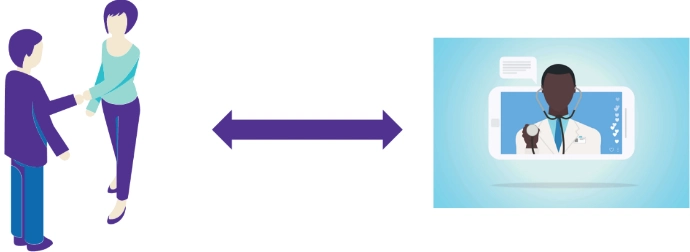
Training is the function that needs to use digital creatively to maximize and drive engagement of training attendees for the knowledge accumulation but also the skills training for in-person and digital interactions. Having the mix of in-person and virtual trainings should also increase comfort levels of people with digital tools as they continue to evolve. Overall each of the functions we discussed – coaching, managing, mentoring, training should also model best practices – why take feedback on making eye contact from someone who never does?
If an MSL who is reluctant to use a specific digital communication channel is strongly encouraged to use this communication channel with you as team lead, with time it is likely they will get comfortable enough to utilize this channel with others including their HCPs.
The takeaway is that digital is here to stay and we need to embrace it and use it productively both internally and externally, no matter what our role is. Let’s use it to our advantage to make us even better at what we do!

About the authors:

Maja Beilmann-Schramm, PhD
Maja Beilmann-Schramm, PhD., Director Global Field Medical Excellence & HCP Exchange at Merck/EMD and owner of MSL-Excellence.de.
Maja holds a Phd. in Biology. She has been working successfully in the pharmaceutical industry for 20 years now, in a variety of positions with extensive experience in Marketing and Sales, Medical and Medical Science Liaison. For more than 10 years she has dedicated her work exclusively to the role of Medical Science Liaison with personal experience as MSL, MSL team lead at country and international level as well as driving MSL excellence on a global corporate level. She is currently holding the position of Global Director of Field Medical & HCP Exchange at Merck/EMD. Maja is the founder and owner of MSL-Excellence.de, where she provides mentoring and consultancy to aspiring MSL, MSLs and MSL Leaders. As a result, she follows the development of the MSL role from a wide variety of perspectives.
Jill Fenwick, PhD
Currently Head of Medical Learning Oncology at EMD Serono (part of Merck KGAa). Prior to that was in Global Field Medical Excellence, having moved to the USA in 2019 to Lead North America Medical Training for Oncology. Joined Merck UK&I in Jan 2015 as an MSL and then Oncology MSL manager.
Having a PhD in oncology and over 25 years of experience in pharma, starting in sales and moving into Field Medical and management, means being able to take into account the Country end-user perspective in 2 key countries (USA and UK). This allows for the creation of engaging and interactive trainings that are strategic and actually relevant and useful for the intended audience. The ethos is training is fun!
Have an opinion on this article? Send a message to the editor.