Professional school, onboarding, and years of experience can provide us with lots of useful science and skills but that does not always translate into success as an MSL. What makes the difference? Having impact as an MSL requires a bit more nuance with our communication to ensure we are navigating through each engagement to the desired outcome. Spoiler alert… that outcome might not be the one we expected or planned! Having impact with scientific exchange is an art. Are you practicing your art?
Why is Picasso’s art any different than a 5-year old’s scribbles? Picasso sometimes uses under ten strokes! So does a 5-year-old!
Why is it that one MSL on my team does so well with continued engagement and I struggle with my doctors ghosting me?
Based on our experience in the MSL space and with coaching MSLs to success, the most successful MSLs are skilled in the art of being an MSL, not simply skilled at communicating scientific data.
For example, let’s take ‘active listening,’ a skill taught repeatedly to new MSLs. While they may not teach this in graduate school, when the topic of ‘active listening’ comes up in training in our professional lives, we struggle to stay alert, to avoid our eye roll, and to make sure we don’t say “duh!”
But what the MSL artists know about ‘active listening’ goes beyond the steps outlined in the course.
- While traditional active listening emphasizes paraphrasing, the MSL artist finds a way to get to the ‘what else’ four levels below the surface
Consider implementing your art by asking clarifying and probing questions to dive into a deeper conversation, getting to the “what else” - While traditional active listening emphasizes the importance of being present, virtual interactions can make this even more challenging, the artful MSL understands the psychology of how eye contact helps someone feel heard
Consider optimizing eye contact through camera placement and utilizing your full screen landscape to ensure that each virtual contact is mimics the feel of an in-person interaction (note: this doesn’t mean stare into the camera during the entire meeting, that’s creepy and not normal behavior) - While traditional active listening emphasizes empathy as a feeling for or with, the MSL artist becomes aware of physician pain points and acknowledges them with a simple word phrase
Consider using “tell me more” or “that must be difficult” and allow the HCP to continue to share. - While traditional active listening encourages you to avoid interrupting and not to focus on your response, this is a critical component when practicing the art of being an MSL
Consider waiting 3-5 seconds before responding, giving the HCP plenty of space to continue their thoughts. Never interrupt as it is rude(!), may alienate the person speaking, and stops the flow of thoughts. - And while traditional active listening emphasizes finding a way ‘in’ to get what we want, the art of being an MSL is being concerned only with AECR (appreciation, encouragement, confirmation, and recognition). This may not result in YOUR agenda getting covered, but the HCP’s agenda (which is more important anyway)! Let’s dive deeper into this concept.
Artists admire the work of others and appreciate something that catches their eye, and it is usually either of minute (often microscopic) detail or the grandeur and confidence of scale. And they usually do so with a silent appreciation. The MSL as artist does the same. Do you…
- Take the time in the waiting room to get a feel for what’s happening in the office? Stop prepping your notes, browsing the magazines, or zoning out and put your phone down. Look around and see, really see, this environment (so that you can comment on it later with appreciation).
- Notice the patients and see, really see, what might be happening to them by observing their gate, their anxiety, their partner.
- Do you really ‘see’ the staff? The best way to do this is to notice the color of their eyes, otherwise you will just be scanning the scene. Is the color warm, friendly, static, vacant? What’s the mood in the office?
- Finally, notice how you feel. What is happening to you? How’s your heart rate, breathing, is your foot tapping wildly? Are you present at this meeting or is your mind focused elsewhere? In medical training, doctors and nurses are told to “take your own pulse before that of the patient.” …Don’t think about your “to do” list on this appointment. Consider instead your “to be” list; who do you want to be to this HCP? How do you want them to remember you?
Take, for example, French pointillist painter Georges Seurat’s painting “A Sunday on La Grande Jatte-1884” (If you missed it at Chicago’s Art Institute, you likely saw it in “Ferris Bleuler’s Day Off”!). Before he took paint to canvas, he did more than fifty preliminary sketches… 50! All the while, it is noted that he was thinking about the following:
- Order
- Design
- Harmony
- Composition
- Balance
- Light
- …and Tension! (critiqued for using dots instead of strokes and for picking a park frequented during the week by those seen of ill repute!)
The message for us: He was not focusing on the final product as much as about the elements within the final product.
What about the elements utilized by an MSL practicing their art to be impactful? Might they include:
- Focus on the Other and their agenda
- Being truly present
- Warmth of tone
- Handshake sincerity
- Eyes… Theirs and the physician’s (what color?!)
- Pausing to hear
- Waiting (W.A.I.T. is a great inner slogan “Why Am I Talking?!)
- Understanding with “What Else?”
- …and Tension! (How to make this somewhat artificial meeting useful, friendly, and worth repeating instead of thinking “I have to” or “my agenda is”)
“An artist is not paid for his labor but for his vision.” – James McNeill Whistler.
“Inspiration does exist, but it must find you working.” – Pablo Picasso. What do you really see? Our suggestion is that, by doing nothing usual on that next visit, you are working like the MSL Artist you want to become.
Kim and Kevin partner providing insights from the PharmD and Executive Coach on a LinkedIn group called “The art of being an impactful MSL” every Monday and Wednesday.
About the authors:

Kim Cremers, PharmD
Kim Cremers, PharmD, is a licensed pharmacist with over 20 years of experience in medical affairs within the pharmaceutical and biotech industry. Throughout her career, she has demonstrated success in leading medical affairs teams across six companies, handling products throughout their lifecycle and spanning various therapeutic areas. Presently, she utilizes her extensive background as an external consultant, aiding organizations in the development or enhancement of their Medical Affairs capabilities, specifically MSLs.
As the Founder and CEO of Petrichor Medical Affairs Consulting, Dr. Cremers provides strategic guidance, planning, training, and executional support tailored to organizations seeking to establish, optimize, or expand their MSL team. Aligned with her passion for teaching about the pivotal role of pharmacists within the industry, Dr. Cremers has developed and teaches “Introduction to the Pharmaceutical Industry” to graduate pharmacy students providing comprehensive insights spanning the drug development continuum, from early-stage development to Medical Affairs, including the role of our commercial colleagues. Kim partners with Kevin O’Connor to provide insights from the PharmD and Executive Coach on a LinkedIn group called “The art of being an impactful MSL”.
Kevin E. O’Connor, CSP, CEC
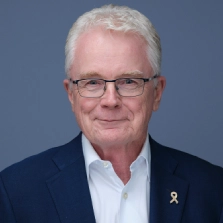
Kevin is an executive coach, professional speaker and teacher. Kevin holds three Masters degrees and his expertise focuses on scientific professionals who are charged with leading and influencing medical professionals. He teaches graduate students at Chicago’s Loyola University, is faculty for the American Association for Physician Leadership (AAPL) and the American College of Healthcare Executives. (ACHE).
Kevin partners with Kim Cremers, PharmD to provide insights from the PharmD and Executive Coach on a LinkedIn group called “The art of being an impactful MSL”.
Have an opinion on this article? Send a message to the editor.