You’re meeting with a customer, and they tell you a colleague of yours was just there to discuss a similar topic. While this can catch an MSL off guard, it can also hinder your ability to further your relationship with an important key opinion leader (KOL).
In a world of increasing scientific complexity and limited access, collaboration between medical, commercial, and R&D teams is becoming even more critical for ensuring a tailored customer experience.
To explore this topic further, Dr. Christoph Bug, vice president of global medical at Veeva, sat down with Andreas Gerloff, vice president and global head of medical customer excellence at Bayer, and Mark Rees-Saunders, former head of global field medical excellence at a large global biopharma. They discussed the benefits of increased collaboration between medical affairs and their commercial and clinical counterparts along with the best ways for organizations to get started with better communication.
Christoph Bug (CB): There’s an increasing focus on joint collaboration between medical and commercial functions. Why is this?
Andreas Gerloff (AG): When we talk about customer centricity and the customer experience, there’s only one customer — there’s not a commercial customer and a medical customer. When it comes to omnichannel engagement, which includes both the MSL and the sales rep, as well as content in digital channels, there is a clear need to have an aligned strategy. Teams work closely together to execute in a way where the customer sees themselves at the center of everything we do.
Mark Rees-Saunders (MRS): More collaboration will also lead to a larger impact and value for external stakeholders, including improved patient care. If you maximize all your functional resources in a coordinated way that removes unnecessary barriers and focuses on customer needs, then the ultimate benefit will be to the patient.
There’s also an upside of maximizing internal resources to avoid duplication of effort and remove competition. Field teams can have more job satisfaction working together in a structured way where expectations are managed, and the integrity of their function is respected.
CB: What is the consequence of not improving collaboration, particularly in the field?
MRS: It can hurt customer relationships, but it can also waste each person’s time. Teams are duplicating efforts if they compete to see the same customers and have similar conversations. This is primarily driven by internal objectives to engage and hit metrics, but from the customer perspective, it adds little value. It defeats the objectives of omnichannel engagement because you are not aligned as a seamless organization, and it drains internal resources.
AG: In my experience, this misalignment between engaging with customers and not knowing what colleagues have previously discussed happens all the time and can be a blind spot. You learn about internal processes and activities from the customer, and that works against any kind of customer-centricity principle. It can hinder the trust you are working so hard to build.
CB: How can organizations improve collaboration between commercial and medical teams?
AG: We’re challenging how we’ve operated for many years and questioning the rationale.
We’ve changed our operating model and are putting together teams consisting of both medical and commercial colleagues to define cross-functional objectives at the account and individual leader levels. This changes the conversation because now everyone is working towards the same objective.
The second part of the discussion is who is best positioned to achieve those objectives. Sometimes, it could be medical; other times, it could be commercial — often, it depends on the personal relationship.
Collaboration also impacts your technology, data, and training strategy. For example, we are lowering firewalls between commercial and medical teams in our CRM system to allow for more information sharing. We are also upskilling people with training, so they better understand the different roles of each function.
MRS: The key point is the operating model. Things like account management and omnichannel need to be jointly driven. The model should fit a purpose for each function and bring them together to maximize engagement.
The other important component is having common objectives, which are not always as simple as you think. To have a common objective that’s appropriate for medical and commercial purposes requires you to think outside the box to determine what can be accomplished together, like educational or diagnostic goals. Everyone’s common objective is the patient. If we drive things that are better for the patient, then ultimately, that’s better for the organization as well.
CB: How do you get everyone on board with this new operating model approach?
AG: It’s not about medical opening up new approaches alone. It needs to be the same for commercial. You must measure cross-functional success by more than just a sales number. It needs to go beyond traditional KPIs on both ends.
MRS: Change management is also critical, as it comes down to people. You need to provide the right infrastructure and frameworks to reinforce this type of work. Don’t leave it to the individual — a certain setup needs to be in place where they’re expected to work together and develop common objectives.
CB: What role does R&D play in joint collaboration efforts?
AG: R&D can tend to be transactional in their engagement with customers. There needs to be more strategic thinking and customer segmentation — and there’s a catch-up that still needs to happen in these areas. Technology and data also play a role, especially given that data is sitting in silos. The same customer name could appear in different systems in different contexts across the organization versus an overall relationship view.
For me, it all comes back to impact. If all the functions talk to each other and all the activities are more orchestrated, the impact will be higher, and job satisfaction will increase.
MRS: In a way, the R&D gap is more significant than the commercial-medical one, and it is often forgotten.
If MSLs work seamlessly with their R&D partners, they will be much more informed about the data and understand the customer’s needs. Sharing insights across functions, relative to a particular customer or account, will make everyone smarter and ultimately allow each function to add more value and provide a greater customer experience.
To summarize, it is not just how medical and commercial align, but also how to increase collaboration with R&D.
With a foundation of joint collaboration, organizations can see improved customer experience with less duplication of efforts, and more impact, which ultimately benefits patients. In order to get there, medical, commercial, and R&D should start by setting joint strategy and objectives, and gain buy-in from key stakeholders to progress toward the future of more customer-centric engagement.
About the authors:

Christoph Bug, MD, PhD, MBA
Christoph is an experienced biopharma executive responsible for Veeva’s global medical strategy. He is a physician by training and has earned a PhD and an MBA. He has held roles in market access, commercial, R&D, and medical affairs on a local, regional, and global levels, most recently as medical lead at Janssen (JnJ) in Germany.

Andreas Gerloff, PhD
Dr. Gerloff is the global head of medical customer excellence at Bayer AG, overseeing global medical customer engagement activities. With a robust background in medical excellence and extensive experience leading teams, he has driven numerous initiatives in digital transformation and process simplification. Passionate about customer engagement, Dr. Gerloff is dedicated to creating impactful, customer-centric solutions that make a real difference.
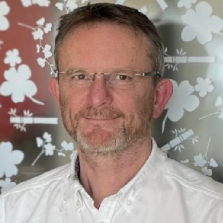
Mark Rees-Saunders
Mark has extensive and diverse experience in the pharmaceutical industry, having held various leadership roles in Medical Affairs at the affiliate, regional, and global levels, with expertise spanning multiple functions, including field medical excellence, business unit director, MSL excellence lead, learning and development, sales and marketing, and research and development.
Have an opinion on this article? Send a message to the editor.