What’s your first reaction when challenged by a KOL? What is your gut reaction? The art of being an MSL involves turning uncomfortable moments into meaningful insights valuable to your company and, more so, to the physician’s patients.
Gaining a deeper understanding of the actual concern can strengthen your KOL relationships by turning this “objection” into a meaningful discussion by asking the right questions. The best MSLs shine through these times and gain valuable insights in the process. In fact, those MSLs want the physician to object! Nora Dunne, actress, director, and SNL alum, said, “Your job is not to please the audience; your job is to engage the audience.” And it is in the engagement that they will be pleased. Don’t shrink, engage! Here are some ideas on how.
When faced with a challenging question, your first step is to gain clarity. You could start by using the skill of paraphrasing (this traditional approach gets you in sync and signals that you understand). You can then ask clarifying questions to get additional facts:
- I want to be sure I understand your comment, it seems the essence of your concern is _______ (safety, price, formulary, etc.)?
- What aspect of the data led you to that statement?
- What are you using for comparison?
- Tell me more. This and the “what else?” question help the physician begin to teach you…become a willing student…you are in the professor’s office!
One strategy is to immediately work to find the “real” question or challenge, the deeper issue the KOL is considering? “Can you give me an example of that from perhaps a patient you are seeing?” is a better response than attempting to reiterate and provide a review. The next step is to ask a few more respectful but probing questions, which will get to the root of the question and clarify the KOL’s objection. Ask questions to facilitate deeper thinking about their comment:
- What brought you to that conclusion?
- What do you think would happen if…?
- Why do you think that is the case?
- What impact do you think that will have?
- What type of data would address your concerns?
The art of being an MSL is about asking the right questions and engaging the physician. Be careful not to challenge but to explore and allow the ‘teacher’ to have their say.
Focus not on the physician or the medication in discussion, but on the impact on the patients on whom we are both focused. Remind yourself that in the mind of the KOL, this is all about patients, not about your drug.
Uncomfortable asking probing questions? Understandable! Our relationships with KOLs are critical and may feel fragile as they are developing, so probing the KOL’s objection should be deliberate, respectful, and skilled. Proceeding sincerely with the goal of providing information to support the best care for patients will make the tenuous MSL more confident and therefore more comfortable and more competent as a connector.
While being respectful doesn’t diminish your value. You have expertise that the physician needs to serve their research and patients, and the physician has given you their time. You have something no one else can give during this visit, so don’t allow yourself to be intimidated. Probing questions=physician interest. If the doctor doesn’t challenge you or at least ask a good question, then the value of scientific exchange is lost.
In an advisory board of 45 physicians eager to hear from a research expert, it became clear he liked himself very much! During his presentation, a physician asked a question. Looking down his nose, the PhD responded, “The question you meant to ask me was _____” Guess what? No more questions for the rest of that morning.
When challenged, avoid becoming defensive or panicking to please, as this may end the conversation quickly and won’t help you become the artist you are working to become. Frame your questions and tone to convey genuine interest in learning more and, ideally, to find the root of the objection. Is this an opportunity to ask questions related to your company’s medical strategy (i.e. key intelligence questions/topics)?
Whether you’re in person or on Zoom, physically lean in to show interest and keep your eyes to be confident. The eyes are the windows of the soul. Act as if you are confident, and you will be. Remember, you are the expert here!
If you don’t know the answer, admit it, and take a note on paper, which will indicate you are serious about gaining an answer. Consider this response: “Thank you. I’m going to make a note and bring it back to our scientists. This is really helpful.” The follow-up is with “When is a good day for us to meet and discuss what I learn?” (Securing a follow-up visit in your calendars!)
With preparation, being challenged by a KOL won’t have you running for the door, even when you’re taken by surprise. Be sure your questions are open-ended, requiring the KOL to think critically about their comments and expand on their thoughts. Give them time to respond (3-5 seconds) and don’t interrupt (it’s rude and worse, it confuses the other person), as it will derail the KOL’s thought process and the insights you are hoping to gain! Ask-Wait-Listen-Respond. Acknowledge their response with body language (a head nod or by leaning in) and listen closely to hear what they are saying. Avoid thinking about your response, as you will miss the nuances of their reply!
Anticipate challenging questions/comments and practice your response aloud with a colleague (they will likely face the same objection), or aloud when you are alone in your car or record a Zoom meeting with yourself answering the question. Multiple practice sessions give you what actors call “muscle memory,” which is the ability to go to options effortlessly. Practice makes perfect!
Being questioned by a KOL, whether it’s easy or difficult, is an opportunity for further discussion, and ideally, a more meaningful one! Use this opportunity to strengthen your relationship and prove your value for the company and to your KOL. Their patients will appreciate it.
About the authors:

Kimberly Cremers, PharmD
Kim Cremers, PharmD, is a licensed pharmacist with over 20 years of experience in medical affairs within the pharmaceutical and biotech industry. Throughout her career, she has demonstrated success in leading medical affairs teams across six companies, handling products throughout their lifecycle and spanning various therapeutic areas. Presently, she utilizes her extensive background as an external consultant, aiding organizations in the development or enhancement of their Medical Affairs capabilities, specifically MSLs.
As the Founder and CEO of Petrichor Medical Affairs Consulting, Dr. Cremers provides strategic guidance, planning, training, and executional support tailored to organizations seeking to establish, optimize, or expand their MSL team. Aligned with her passion for teaching about the pivotal role of pharmacists within the industry, Dr. Cremers has developed and teaches “Introduction to the Pharmaceutical Industry” to graduate pharmacy students, providing comprehensive insights spanning the drug development continuum, from early-stage development to Medical Affairs, including the role of our commercial colleagues. Kim partners with Kevin O’Connor to support teams working to optimize their impact.
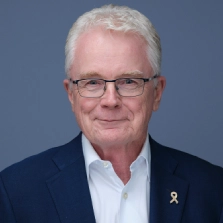
Kevin E. O’Connor, CSP, CEC
Kevin E. O’Connor, CSP, CEC is an executive coach, professional speaker, and teacher. Kevin holds three Master’s degrees, and his expertise focuses on scientific professionals who are charged with leading and influencing medical professionals. He teaches graduate students at Chicago’s Loyola University, is faculty for the American Association for Physician Leadership (AAPL), and the American College of Healthcare Executives. (ACHE). Kevin partners with Kim Cremers, PharmD, providing support to teams working to optimize their impact.
Have an opinion on this article? Send a message to the editor.