
Do you wonder why some MSLs are (or seem to be) more ‘connected’ than others? They seem to know more people, seem to get promoted faster, are aware of what’s happening in real time, and heck, they just always seem to be ahead of the rest of us! You may see them as the “Super MSL” or “MSL’s MSL.” They know the art of being an impactful MSL!
How about you? Were you ever stuck at a party and didn’t know a soul leaving you to feel unconnected? Have you ever met a new KOL or better/worse inherited one from a “Super MSL” and felt you’d never develop that strong connection?
Networking will help others know the real you, at least the real you that you want them to know and foster your connection!
It may be true that the “Super MSL” is more connected, but it may not. In our experience, most of that may be happening in your head instead of happening in reality.
First thing to remember is that networking is not only for extroverts. Networking is quite literally a net with holes and strong rope. Some of the people you will meet will fall through the holes, others will be caught in your net. This natural process is important since you need to be selective. You don’t need everyone; you need special ones.
Here are some tips:
- Dress up to stand out. Compare yourself to your colleagues, are you dressing like they are? What then makes you different, memorable, and identifiable? Early careerists often seem to prefer black. Let them dress that way, not you. Get advice from a good source and be willing to pay the price on at least one outfit that sets you apart.
- Be present and have presence. This enduring lesson from Char Wenc came to me many years ago and continues to remind me that while I can be physically present, I can also be invisible to the memory. Show up and talk. Lean forward and listen. Show up and take physical notes (no computer up to block the engagement). Phone on silent and not on the desk. Do everything in your power to show you are here and your KOL is being heard.
- W.A.I.T. This stands as a reminder to all MSLs “Why Am I Talking?” Sometimes we think by talking we will impress. Actually, just the opposite is true… You will be better remembered by how you listen, how you attend, how you seem fully with the other person. At a recent party I had a long conversation with a horticulturalist about invasive plants, glaciers, and oak trees! It was interesting, he was interesting, and I was interested. So be interested instead of trying to be interesting. You can have a terrific conversation with anyone about anything especially things you don’t know if only you will WAIT and listen.
- Ditch your “elevator speech” Nobody wants to be trapped listening to you about you. Prepare a conversational identity statement to use when asked, such as “I work with ______ who want to _____ so that they can ______.” And then turn the conversation to them by adding “How about you?” or “Were you ever on a work team where the leader of the team got promoted to lead the team but didn’t really have any training in being a leader? That’s who I work with. How about you?” These are designed to stimulate a conversation moment not an admiration moment.
- Have a routine you can count on…look for ‘the one’ that is most interesting to you. Personally, I look for those who sit alone and quite simply go over and say, “Hi I’m Kevin, OK to share your table?” They always say yes, and it gives me an opportunity to engage in a conversation. I did this outside of a funeral once thinking the person was somehow important to what brought all of us together. Turns out he owned a junkyard (which actually is pretty interesting!), was married to the important person who I then met and helped her get hired at our university. Some call it fate, we call it taking advantage of a situation before us.
- Engage your Human Relations Skills…early and often. Godin calls these “real” skills because they are why you were really hired. Some call them ‘soft skills’ which I think diminishes them. I call them “transformational skills” because when used well, they do transform our place among others.
- Memorize names, places, events, and family members. Nothing is quite so sweet as the sound of our name and that of our children. Take advantage of this by being the one who uses names. Sometimes you will hear “I’m not good at remembering names” and the advice is, “I wonder what it is costing you to keep being “not good”?
- Sit with strangers, introduce yourself, inquire, and ask for advice. I usually say, “What kind of work do you do?” Followed by “Did you go to school to learn how to do that?” This is usually met with a smile and the conversation has begun!
- Avoid alcohol (even one) at after-hours events. Avoid your friends who are drinking too much also. Eating with the boss? Many young men take their suit coats off at meals…mistake. I rarely see a CEO do so. Dress like the CEO, act like you are the CEO, engage like a CEO, and don’t eat furiously. Don’t start eating till everyone has been served. Pass the bread bowl before you take your share. Business meals are not for eating, they are for meeting.
- When you are being interviewed, know the ‘silent question’ that is in the mind of the other. My clients who interview say the following:
- Can this person solve my problem?
- What is this person like to work with?
- Can this person improve my team in some way?
- Do I like this person?
You are still answering their questions of course, but you are also adding a magic word after each answer…”because” or “the reason this is important is” which shows not only your answer but more importantly your ‘take’ on the material, your ‘wisdom”…that is what will make you different, unique, and show the value the real you will bring.
The skills of the effective networker apply to our KOLs as much as they do to a party, a new job, a committee assignment, or even when you and your family are new to the neighborhood.
KOLs want to know that you are confident and capable. They want to know that you won’t waste their time but do want you to give them all the time they need. And KOLs really want insights, just like you want from them, to help their patients.
Dressing well gets you in the door and makes the initial impression. Yes, it is superficial, but how do you see those who are well put together as opposed to those who just left their dorm room? This is important for virtual meetings too!
Be present and listen. Make it about them and their patients. Engage their staff with genuine interest, use their names, and make notes for next time. Be a light in their day.
Kim and Kevin partner providing insights from the PharmD and Executive Coach on a LinkedIn group called “The Art of Being an Impactful MSL” every Monday and Wednesday.
Insights from a PharmD & an Executive Coach. What are YOUR ideas about the art of being an impactful MSL? Please repost if your network would find this useful. We’ve only scratched the surface, join our LinkedIn MSL community for more: https://www.linkedin.com/groups/14462043/ and join our mailing list to receive the complete tip series delivered right to your inbox: http://eepurl.com/iYHNjY
About the authors:

Kim Cremers, PharmD
Kim Cremers is a licensed pharmacist with over 20 years of experience in medical affairs within the pharmaceutical and biotech industry. Throughout her career, she has demonstrated success in leading medical affairs teams across six companies, handling products throughout their lifecycle and spanning various therapeutic areas. Presently, she utilizes her extensive background as an external consultant, aiding organizations in the development or enhancement of their Medical Affairs capabilities, specifically MSLs.
As the Founder and CEO of Petrichor Medical Affairs Consulting, Dr. Cremers provides strategic guidance, planning, training, and executional support tailored to organizations seeking to establish, optimize, or expand their MSL team. Aligned with her passion for teaching about the pivotal role of pharmacists within the industry, Dr. Cremers has developed and teaches “Introduction to the Pharmaceutical Industry” to graduate pharmacy students providing comprehensive insights spanning the drug development continuum, from early-stage development to Medical Affairs, including the role of our commercial colleagues. Kim partners with Kevin O’Connor to provide insights from the PharmD and Executive Coach on a LinkedIn group called “The Art of Being an Impactful MSL”.
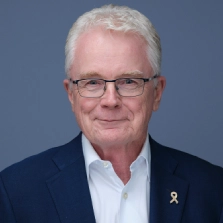
Kevin E. O’Connor, CSP, CEC
Kevin E. O’Connor is an executive coach, professional speaker and teacher. Kevin holds three Masters degrees and his expertise focuses on scientific professionals who are charged with leading and influencing medical professionals. He teaches graduate students at Chicago’s Loyola University, is faculty for the American Association for Physician Leadership (AAPL) and the American College of Healthcare Executives. (ACHE). Kevin partners with Kim Cremers, PharmD to provide insights from the PharmD and Executive Coach on a LinkedIn group called “The Art of Being an Impactful MSL”.
Have an opinion on this article? Send a message to the editor.