Disclaimer: The ideas discussed in this manuscript belong to the authors and do not represent views or endorsements of their employers
Introduction: Medical Affairs in the Age of AI
We are living in a transformative moment in medical affairs. For the first time, the instantaneous availability of data and information allows for the strategic integration of real-world evidence, digital health data, and biomarker-mediated algorithms to facilitate engagement with healthcare providers. Future strategies will be more efficient, intelligent, and personal than ever before. This new era requires partnership between medical affairs organizations and machine-based intelligence in ways that both streamline and capitalize upon innovation.
As we continue to grow and evolve, we must establish a fundamental expansion of medical affairs capabilities. Artificial Intelligence (AI) has rapidly become part of our core infrastructure that will optimize scientific exchange, increase opportunities for evidence generation, and accelerate clinical insight generation to advance scientific strategy. The question is no longer whether AI will impact how medical affairs functions, but how medical affairs will lead its integration.
There are increasing opportunities for organizations to amplify data generation, strategic analysis, and actions based on insight collection to improve patient care. In a world where data is synthesized in seconds, and predictive algorithms anticipate unmet needs before they are voiced, medical teams must expand their capabilities by replacing “things of old”, while focusing on what remains irreplaceable and human.
The Value of Medical Affairs Becomes More Human
As our society moves towards automation and machine-based handling of traditional tasks, many predict the need to accommodate a psychological void in human connection. Experts predict growth in community initiatives, experiential hospitality, and “high touch healthcare”. In medical affairs, it is likely that the workload associated with things like literature monitoring, slide deck generation, insight aggregation, and CRM notations will almost certainly decline. This will be met by opportunities for growth in insight interpretation, evidence gap, identification, AI governance, and most importantly, human connection.
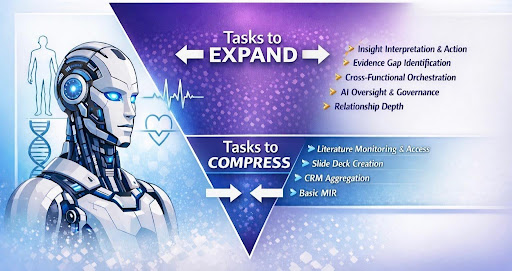
Figure 1. Changing landscape in medical affairs evolution.
(Image generated by Subagiarta and Hansen 2026, using AI-enhancements of Microsoft Office content through ChatGPT)
To stay valuable, the element that will become irreplaceable is the relationships formed with healthcare providers. While a medical information request could be synthesized in seconds – with or without a MSL – healthcare providers will benefit from the engagement with field personnel for human connection and peer-level confirmation of scientific and clinical data.
While opportunities for AI-enabled medical affairs strategies seem limitless, we must also anticipate the likelihood of friction. The introduction of new capabilities for organizations is likely to create signal overload, change fatigue, and problems with a lag in efficient governance. As we move into an “all in on AI” mindset, we must predict and embrace agility when introducing new technologies. This will require leadership teams to encourage intentionality in AI adoption while assessing readiness when introducing new tools.
What Technology Should Absorb and Why That’s Progress
If the value of Medical Affairs becomes more human, then we must be equally clear about what should not remain human. AI is particularly well suited for high-volume, pattern-based, and repeatable work. The cycle between insight generation, strategic planning, and field execution shortens. Medical, commercial, and analytics teams increasingly operate within shared data environments, reducing fragmentation, and enabling coordinated action. Decisions move with greater speed, but also with greater interdependence. When delegated appropriately, these capabilities do more than create efficiency. They reshape operational design.
This compression of time and effort carries cross-functional implications. As organizations evolve, functional overlap in capabilities is inevitable. It will be important for organizations to embrace and join forces across medical, commercial, and patient service groups to facilitate enterprise capabilities based on determining when and how the right function is deployed at the right time.
Speed alone, however, is not progress. The true advancement lies in redirecting professional focus toward what cannot be automated: challenging assumptions behind a signal, evaluating the clinical relevance of emerging patterns, identifying meaningful evidence gaps, and safeguarding scientific integrity within strategic decisions.
In practice, the risk is not over-absorption by technology. The more consequential challenge is the reluctance to relinquish legacy models of productivity. When contribution continues to be measured by activity rather than impact, progress stalls despite expanded capability.
Evolution Beyond Adoption
The shift towards the future is no longer about tools, but about the functional role of medical affairs. As intelligent systems scale, the responsibility of the Medical Affairs professional expands. The profession moves from managing information to governing its interpretation, from generating outputs to safeguarding standards.
As AI compresses the distance between insight generation and strategic discussion, Medical Affairs increasingly operates at the intersection of data, cross-functional planning, and scientific interpretation. In this environment, stewardship becomes central. Not to slow progress, but to ensure that rigor keeps pace with speed. Stewardship means understanding how models are built, questioning assumptions, clarifying uncertainty, and being explicit about limitations.
Healthcare providers do not look to Medical Affairs for data alone. They seek interpretation and validation grounded in scientific integrity. Internal teams depend on medical judgment to ensure that emerging insights are translated responsibly and aligned with evidence standards. Evolution beyond adoption is therefore less about expanding technical fluency and more about strengthening professional discipline. As intelligent systems scale, the standard for accountability must grow with them. Technology can accelerate analysis, but it cannot assume accountability. Trust remains the foundational element of every Medical Affairs relationship.
Conclusion: A Challenge to the Profession
The future of Medical Affairs will not be defined by how quickly we adopt new tools. It will be shaped by how we thoughtfully and strategically, we evolve. We are already operating in an automated era. Some elements of our work should -and will- shift to intelligent systems. But the core of the profession, grounded in human relationships, does not diminish our capabilities; it sharpens them.
The opportunity before us is not to compete with AI, but to elevate what makes our role uniquely human. If we lead this transformation with clarity and purpose, this transformation positions Medical Affairs to help define the future of healthcare.
About the authors:

Arta Subagiarta, MD, MMSC
Arta is an Associate Medical Director at Sanofi with a broad background spanning clinical practice, academia, startup leadership, and extensive experience across both global and regional pharmaceutical landscapes. As a former co-founder of a multimillion-dollar health-tech startup, he brings a unique lens to medical affairs. At Sanofi, he drives innovation through scalable, patient-centered solutions that blend science, digital tools, and strategic insight. He has led cross-functional efforts in medical strategy, field engagement, and capability building, all fueled by a passion for turning science into real-world impact.

Christopher N. Hansen, PhD, MBA
Chris is a translational scientist by training with extensive experience in medical affairs. Chris completed his PhD and postdoctoral training at the Ohio State University and later completed his MBA with a specialization in healthcare leadership. He has spent over a decade in the industry working as an MSL, Medical Director, and MSL Director. He has supported 13 product/indication launches while leading HQ and field strategy development for field teams. Throughout this time, Chris has consistently looked for opportunities to mentor new and aspiring MSLs. He seeks to transform healthcare by inspiring field medical teams to deliver high-quality patient-focused engagement. When not at work, Chris is an avid runner and loves spending time with his wife and four children.
Have an opinion on this article? Send a message to the editor.