For decades, agencies under the U.S. Department of Health and Human Services (HHS) were regarded as the gold standard for medical and scientific guidance. Healthcare professionals (HCPs) trusted these agencies to provide reliable, evidence-based recommendations that shaped clinical practice standards and public health interventions. As federal health agencies face mounting criticism, politicization of science, and high-profile controversies, confidence among HCPs has eroded. The void left behind creates both a challenge and an opportunity for medical science liaisons (MSLs).
During the COVID-19 pandemic, 43% of physicians reported a decrease in trust in federal health agencies. 1 More recent events have further damaged the credibility of federal health agencies, including statements contradicting scientific evidence 2-3 and the shortcutting of the FDA’s rigorous approval process. 4 Such incidents have led to coordinated efforts by federal healthcare workers to condemn HHS leadership for spreading misinformation,5-6 and medical groups and state agencies issuing guidance that contradicts federal recommendations.7-8
For HCPs, the stakes are high. Clinical practice depends on reliable, consistent sources of objective scientific information. When those sources appear fractured or politicized, practitioners face an environment of uncertainty. This erosion of trust compounds an already difficult reality: HCPs are inundated with information daily, not all of it accurate, and even highly trained clinicians are not immune to misinformation.9 In this environment, HCPs will increasingly look elsewhere for clarity and credibility.
Why HCPs Will Lean on MSLs
MSLs are uniquely positioned to fill the trust gap left behind by the federal government. Furthermore, the interpersonal relationships MSLs have with HCPs are well-suited to combat misinformation. These collegial relationships are built on trust and professional similarity. MSLs are perceived as peers, with scientific expertise, whose credibility stems from both their subject matter knowledge and their lack of political entanglement. These relational dynamics give MSLs a level of trust that federal agencies are struggling to maintain.
As the government’s credibility declines, HCPs are likely to rely even more on MSLs to provide clarity amidst uncertainty. In a landscape of conflicting voices, MSLs who communicate reliably and transparently become stable, trusted advisors. In doing so, MSLs can reinforce HCPs’ ability to make confident, evidence-based decisions.
Combating Misinformation in Clinical Spaces
Misinformation is no longer confined to patients scrolling social media. It has infiltrated clinical conversations as well. Even HCPs can become susceptible, particularly when federal guidance appears politicized or inconsistent. This creates an urgent need for credible, trusted information sources accessible to HCPs.
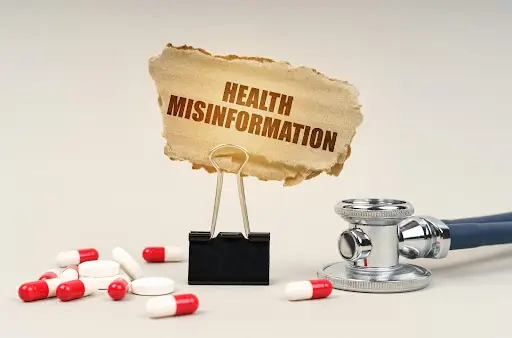
MSLs can help HCPs overcome misinformation by:
- Detecting misinformation early. Their close ties with clinicians allow MSLs to identify misconceptions and offer rapid, evidence-based clarification directly to HCPs.10
- Acknowledging skepticism. Rather than dismissing concerns outright, MSLs can validate HCPs’ need for clarity and then provide the data and context necessary to evaluate claims critically.
- Repeating corrections: If an HCP is misinformed, repeated evidence-based corrections over time may be necessary for them to accept accurate information.11
- Reinforcing critical evaluation. Medical misinformation often derives from misinterpretation or misrepresentation of scientific evidence. Many HCPs struggle to interpret scientific research data.12-13 By equipping HCPs with context and data literacy tools, MSLs strengthen clinicians’ ability to distinguish sound evidence from distorted claims.
- Providing alternatives. Rather than only negating misinformation, MSLs can offer clear, evidence-based alternative explanations. By offering a factual narrative that fills the cognitive gap left by the correction, MSLs make it easier for HCPs to modify their understanding and ensure their decisions are based on accurate medical information.14
As trust in traditional authorities wavers, the integrity of medical decision-making increasingly rests with those who engage directly with clinicians. MSLs are uniquely positioned to meet this responsibility, not by replacing federal agencies but by reinforcing the foundations of evidence-based practice through credibility, transparency, and relational trust. Their role in combating misinformation is essential. As distrust in institutions deepens, MSLs are becoming even more important in safeguarding evidence-based medicine.
References
- ABIM Foundation; NORC at the University of Chicago. Surveys of Trust in the U.S. Health Care System. Published May 21, 2021. Accessed September 29, 2025. https://buildingtrust.org/wp-content/uploads/2021/05/20210520_NORC_ABIM_Foundation_Trust-in-Healthcare_Part-1.pdf
- Wright-Piersanti, T. A fact-check on Trump’s claims about Tylenol, vaccines and autism. The New York Times. Published September 23, 2025. Accessed September 29, 2025. https://www.nytimes.com/2025/09/23/us/trump-tylenol-autism-vaccines-fact-check.html
- Taylor L. RFK Jr orders CDC to review fluoride recommendations. BMJ. 2025;389:r723. doi:10.1136/bmj.r723.
- Perrone M. What to know about leucovorin, unproven autism drug touted by Trump. PBS News. Published September 24, 2025. Accessed September 29, 2025. https://www.pbs.org/newshour/health/what-to-know-about-leucovorin-unproven-autism-drug-touted-by-trump
- Tanne JH. Over 5000 US government health employees denounce “dangerous and deceitful” RFK Jr statements. BMJ. 2025;390:r1804. doi:10.1136/bmj.r1804.
- Kekatos M. 750 HHS employees send signed letter to RFK Jr asking him to stop spreading misinformation. ABC News. Published August 20, 2025. Accessed September 29, 2025. https://abcnews.go.com/Health/750-hhs-employees-send-signed-letter-rfk-jr/story?id=124805697
- Rodriguez A. There’s a war brewing between medical groups and RFK Jr. It’s about to explode. USA TODAY. Published August 6, 2025. Accessed September 29, 2025. https://www.usatoday.com/story/news/health/2025/08/06/hhs-secretary-rfk-jr-doctors-war/85419130007/
- Castronuovo, C. States plan to diverge from CDC panel on Covid vaccine guidance. Bloomberg Law. Published August 28, 2025. Accessed September 29, 2025. https://news.bloomberglaw.com/health-law-and-business/states-plan-to-diverge-from-cdc-panel-on-covid-vaccine-guidance
- Holzer H, Diviani N, Rubinelli S. COVID-19 misinformation and healthcare workers: A scoping review. Patient Educ Couns. 2025;141:109309. doi:10.1016/j.pec.2025.109309.
- Brashier NM, Pennycook G, Berinsky AJ, Rand DG. Timing matters when correcting fake news. Proc Natl Acad Sci U S A. 2021;118(5):e2020043118. doi:10.1073/pnas.2020043118.
- Swire-Thompson B, Dobbs M, Thomas AK, DeGutis J. Memory failure predicts belief regression after the correction of misinformation. Cognition. 2023;230:105276. doi:10.1016/j.cognition.2022.105276.
- Kahwati L, Carmody D, Berkman N, Sullivan HW, Aikin KJ, DeFrank J. Prescribers’ knowledge and skills for interpreting research results: A systematic review. J Contin Educ Health Prof. 2017;37(2):129-136. doi:10.1097/CEH.0000000000000150.
- Moynihan CK, Burke PA, Evans SA, O’Donoghue AC, Sullivan HW. Physicians’ understanding of clinical trial data in professional prescription drug promotion. J Am Board Fam Med. 2018;31(4):645-649. doi:10.3122/jabfm.2018.04.170242.
- Lewandowsky S, Ecker UKH, Seifert CM, Schwarz N, Cook J. Misinformation and its correction: Continued influence and successful debiasing. Psychol Sci Public Interest. 2012;13(3):106-131. doi:10.1177/1529100612451018
About the author:

Justin O’Rourke, MA, MBA
Justin O’Rourke is a behavioral science subject matter expert specializing in relationships between pharmaceutical companies, prescribers, consumers, and other health care system stakeholder groups. In addition to an MBA from the University of Wisconsin–Whitewater, Justin holds a master’s degree in industrial-organizational psychology from The Chicago School, where he is a doctoral candidate studying business psychology. Justin’s research focuses on trust dynamics in the HCP-MSL relationship, peer-to-peer influence, physician decision-making, medical affairs engagement strategy, and health mis/disinformation.
Have an opinion on this article? Send a message to the editor.